Is Your Boat Ready for Hurricane Season?
Is your boat ready for hurricane season? Here in Florida, the beauty of boating comes with the very real need for solid boat protection when storms roll in. Whether you’re docked near Palmetto’s serene shores or frequent the waters further down the coast, securing your vessel is critical.
Hurricanes bring fierce winds and heavy rains, but the storm surge is often what does the most damage, even to well-secured boats. Each year, these storms remind us why having a solid plan in place long before the weather turns matters so much.
Understanding your boat insurance policy is equally important, since coverage varies widely between providers. Some plans cover storm damage outright, while others require separate endorsements for complete protection. Knowing exactly what you have before a storm is on the radar can make all the difference.
In this guide, we’ll walk through practical tips to help you protect your investment during hurricane season. Take the right precautions now, and you’ll be back on the water as soon as the skies clear.
Securing Your Boat Afloat or Ashore
Whether you keep your boat in the water or pull it out ahead of a storm, the goal is the same: minimize exposure and lock everything down. The right approach depends on the type of boat you have and what facilities are available to you.
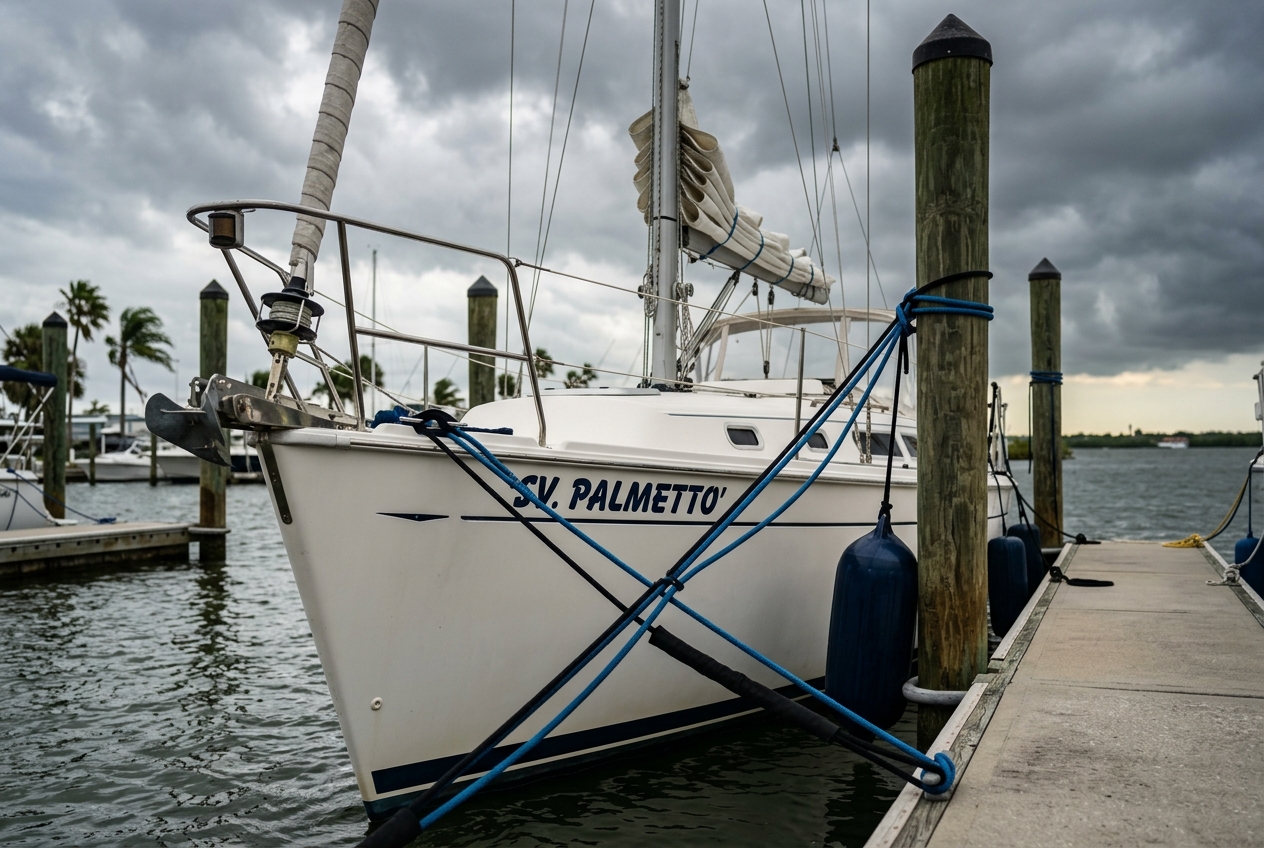
If you choose to keep your boat afloat, pick a well-protected marina or sheltered anchorage that offers real defense against high winds and storm surge. A floating dock is a genuine advantage here, since it rises with the water rather than fighting it. Make sure your mooring lines are strong and long enough to handle tidal fluctuations, double them up where you can, and cross them for added stability. Chafe guards at any contact points are a small detail that prevents a big problem.
For those with access to a secure marina or yacht club, a slip with sturdy pilings gives you a meaningful edge. Rig your lines so the boat can rise safely with storm swells, and clear the deck of anything loose. A misplaced fender or unsecured cushion becomes a projectile at 100 mph.
Going ashore? Choose a location that’s elevated and set back from the water. Trailerable boats should be moved to high ground and secured with heavy-duty straps. Experts also recommend anchor lines tied to ground bolts for extra stability. Point the bow into the expected wind direction to cut down on wind resistance.
Take down the sails and strip the boat of canvas covers, electronics, and personal gear. Even on dry land, flying debris can cause serious damage, so treat every loose item as a liability.
Review your insurance policy before any of this, not after. Coverage for hurricane damage varies, and knowing what you’re working with shapes every decision you make.
Preparing Your Boat for the Storm
When a storm is building in the Gulf, every hour of preparation counts. Here’s how to get your boat ready before conditions deteriorate.
Start by building a hurricane plan well ahead of season, not the night before a storm makes landfall. That plan should spell out where your boat goes when a storm approaches, who handles what, and which areas to avoid due to surge risk. Think of it like a fire escape plan. You want it written down and rehearsed, not improvised under pressure. The National Hurricane Center is a reliable resource for tracking storms and staying ahead of developing threats.
Securing the boat itself comes next. Strip the deck of anything that can move: sails, cushions, life rings, antennas. Store them onshore. Double up your mooring lines and inspect every one of them for fraying or wear. A line that looks fine in calm water can fail fast under storm load.
Think carefully about where your boat sits in its slip. If it’s in the water, account for surge and wind direction when positioning it. Boats on trailers belong on high ground, away from trees and power lines. Use wheel chocks to immobilize the trailer, and let a little air out of the tires to keep it from rolling.
Go through every hatch, door, and window and make sure each one is sealed tight. A compromised seal is an open invitation for water intrusion. While you’re at it, confirm that your bilge pumps are working and all batteries are fully charged.
Disconnect shore power and secure the cables on the dock side. Power surges during a storm can silently fry electrical systems, and that’s a repair bill no one wants alongside storm damage.
Finally, review your insurance coverage before hurricane season gets rolling. Policies differ significantly on what they cover and what they require of you during storm preparation. Know the terms before you need to use them.
Using Insurance to Cover Risks
Good preparation and a strong marina go a long way, but insurance is what catches you financially when the storm doesn’t cooperate with your best efforts.
Boat policies vary widely, and the details matter. Work with a trusted agent at Anderson & Associates to go through your specific policy line by line. Standard coverage often includes damage from hurricanes, theft, and accidents, but the scope depends on your carrier and policy terms.
One thing to look for closely is a named storm deductible. In Florida, some policies apply a separate, higher deductible specifically for named storms. That distinction can dramatically change your out-of-pocket costs after a major hurricane, so it’s worth understanding before you’re filing a claim.
Also pay attention to whether your policy uses agreed value or actual cash value. With agreed value, your insurer pays a pre-set amount in the event of a total loss. With actual cash value, depreciation factors in and your payout may be lower than you’d expect. For a boat you’ve maintained well, that difference can sting.
Check whether your policy covers salvage and removal as well. If a storm moves your boat into a position where it becomes a navigational hazard, removal can be required and it isn’t cheap. Knowing your policy addresses that scenario protects both your finances and your standing with local marine authorities.
Many policies also include towing and emergency assistance, which matters more than people realize during hurricane season. If you need to move the boat quickly with a storm bearing down, having that coverage already in place removes one more obstacle.
Every policy has its specifics, and coverage varies. A conversation with an insurance professional now, before storm season peaks, ensures your policy actually fits your situation. Florida boat owners can also reference the Florida Division of Emergency Management for additional storm preparedness resources specific to the state.
Frequently Asked Questions
How should I secure my boat in anticipation of a storm?
Start by removing all loose items on deck and below. Check your mooring lines, double them up, and make sure they’re long enough to account for potential surge. Install fenders if your boat is docked to prevent hull damage. For many boat owners, moving to a hurricane-safe harbor or dry storage is the most reliable option when a serious storm is approaching. The American Boating Association offers additional guidance on safe boating practices and storm preparation.
What insurance options are available for boat owners in hurricane-prone areas?
Standard boat insurance doesn’t always cover hurricane damage, so review your policy carefully. Look for storm damage as a named covered peril, and ask about hurricane haul-out coverage, which compensates you for relocating your boat ahead of a storm. Coverage specifics vary significantly by policy and carrier, so talk to your agent before season starts rather than after a storm passes.
Is it better to dock or trailer my boat during a storm?
If you can trailer it, that’s generally the safer choice. Get it on high ground, strap it down securely, and keep it away from trees and anything that could fall or fly. If trailering isn’t an option, strong mooring lines at a well-protected dock or mooring field are your next best move. Check with your marina too, since many have specific hurricane protocols you’ll need to follow.
Next Steps For You
Protecting your boat from Florida’s hurricane threats comes down to preparation and knowing your coverage before you need it. Strong mooring lines, a cleared deck, a solid storage plan, and a policy you actually understand add up to a vessel that has a real chance of coming through a storm intact. Connect with Anderson & Associates to review your coverage and make sure you’re not carrying any gaps heading into hurricane season.