Is Your Home Ready for a Flood?
For Floridians, that’s not a hypothetical question. Flooding is a frequent threat, especially during hurricane season, and even homes with some protection can end up underwater. A solid flood response plan starts before the water rises, but knowing what to do in the aftermath matters just as much. If it happens to you, the situation can feel overwhelming fast. Knowing the right steps helps you protect both your property and your peace of mind.
Start by ensuring everyone’s safety. If floodwater is still present, avoid entering your home until local authorities deem it safe. Water can hide hazards like electrical issues or structural damage. Once inside, document the condition of your home thoroughly. Take photos and videos of the damage for insurance purposes before moving anything or starting cleanup.
Next, focus on minimizing further damage. Carefully remove items that can be salvaged to a dry place, and begin airing out your home if possible. Contact your insurance provider as soon as possible to report the damage and discuss your coverage options. Coverage varies, so review your policy closely and stay informed about any specific steps your carrier requires.
Handling a flood is daunting, but quick, informed action can make a real difference in your recovery.
Ensuring Immediate Safety
When it comes to flood response, your first priority is the safety of yourself and everyone in your household. In something as chaotic as a home flood, staying calm and knowing what to do next can make a critical difference.
If you’re in a flood-prone area like parts of Florida, keep a close eye on weather alerts. If a flood warning is issued, move to higher ground right away. Avoid walking or driving through floodwaters — they’re almost always more dangerous than they look. Even six inches of moving water can knock you off your feet, and just a foot of water can sweep away a vehicle.
Once you’re in a safe location, check for injuries among people and pets. For anything serious, call emergency services immediately. Phone lines may be down due to flooding, so keeping a charged mobile phone with emergency contacts pre-stored can be a lifesaver.
On the home safety side, if you can do so without risk, turn off utilities like gas, electricity, and water to prevent further hazards. If you can’t reach them safely, evacuate and contact someone who can help. Avoid any contact with floodwater, which is often contaminated with sewage and debris and can cause serious health issues.
If you’re in Palmetto, Florida, take time now to familiarize yourself with local evacuation routes and community shelters. Knowing these details before a storm hits means you’re not scrambling when time is short.
After confirming everyone is safe, keep communication open with neighbors who might need help. Sometimes a quick check on an elderly neighbor is the difference between a close call and a tragedy. Recovery is often a community effort, not just an individual one.
Your safety comes first. React swiftly and carefully to protect yourself and others during a flood.
Assessing Damage Responsibly
Once you’re safe, it’s time to assess the damage responsibly. Start by carefully re-entering your home. Floodwaters leave behind unseen hazards like weakened structures and compromised electrical systems, so don’t rush it.
Before stepping inside, confirm the power is off to eliminate the risk of electrocution. If you’re unsure about the electrical system, call a professional rather than guessing. Once inside, look for structural damage like warped floors or cracked walls. These issues typically require a professional inspection before the space is safe to use.
Walk through methodically. Take inventory of all damaged items and document everything with photos and video. Your smartphone works fine for this. Capture images of furniture, electronics, appliances, and anything sentimental. This documentation will be essential when filing your insurance claim, so be thorough.
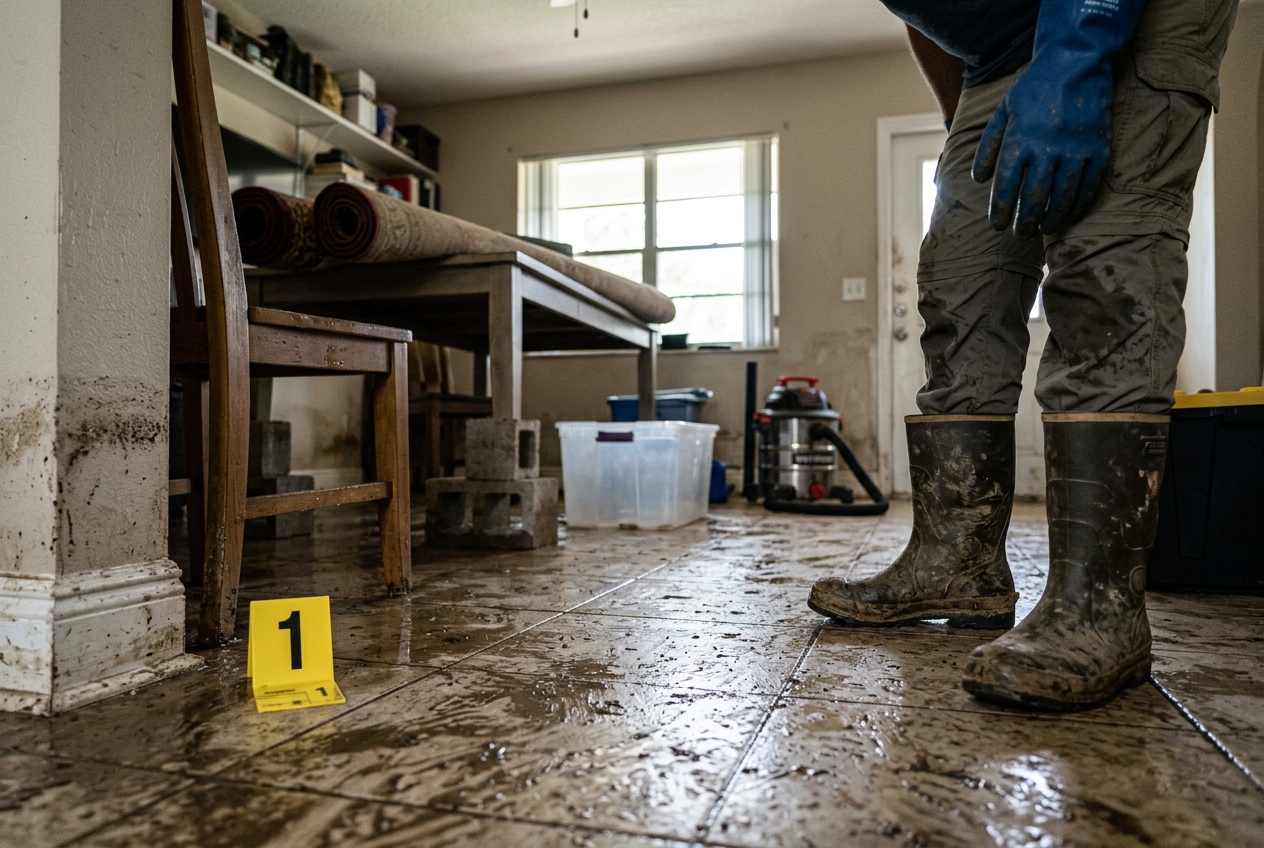
If the floodwaters have receded, they’ve likely left behind mud, sludge, or debris. Wear gloves and boots to avoid direct contact with contaminated materials. In Florida’s humid climate, these conditions can fuel rapid mold growth, so ventilate your home as early as possible. Open windows and doors to help dry things out.
In the kitchen, don’t assume appliances are safe just because they look fine. If your fridge, oven, or any large appliance came into contact with water, have a technician inspect it before you plug anything back in.
Finally, set aside items that are beyond saving. It’s hard, but separating damaged from salvageable belongings makes the cleanup process faster and more focused. Acting carefully during this phase has a direct impact on your recovery timeline. And remember, flood damage coverage varies based on your individual policy, so reach out to us if you have questions about what yours includes.
Contacting Professional Help
Once the immediate danger has passed and everyone is accounted for, it’s time to bring in professionals. This step is more important than many homeowners realize.
Start by contacting water damage restoration specialists. These professionals have the equipment and expertise to assess structural damage, identify mold risks, and catch water damage that isn’t immediately visible. In Florida, where humidity is persistently high, mold can take hold within 24 to 48 hours after flooding, creating serious health risks and compounding the damage to your home.
Having a trusted restoration company identified before a disaster strikes can save you critical time. Local companies in areas like Palmetto understand the specific challenges that come with Florida flooding, including rapid mold development and the particular ways these storms affect residential structures. That local knowledge translates to a faster, more targeted response.
Once restoration work is underway, contact a licensed electrician. Floodwaters frequently compromise electrical systems in ways that aren’t obvious to the untrained eye. Keep the power off until a qualified electrician has verified that your circuits, outlets, and appliances are safe. This protects your home and gives you real peace of mind, not just a feeling that things are probably okay.
After that, if your home is insured, call your insurance agent. Understanding your coverage and the claims process is what sets the stage for financial recovery. Bring your photo documentation and your list of damaged items. An adjuster will need all of it to process your claim.
Flooding is a lot to handle, but you don’t have to figure it out alone. Working with professionals who understand Florida’s flooding conditions specifically can reduce your stress and get your home back to a safe state faster.
Frequently Asked Questions: What to Do If Your Home is Flooded
What immediate actions can minimize flood damage?
First, ensure your safety by turning off electricity and gas only if it’s safe to do so. Water conducts electricity and can pose a serious hazard. Next, try to stop the inflow of water if possible, using sandbags or tarps. Move valuables, furniture, and important documents to a higher elevation or dry area. Document the damage with photos or videos for insurance purposes. Once it’s safe, begin removing standing water using pumps, buckets, or wet/dry vacuums.
How do I safely assess structural damage after flooding?
Before assessing damage, make sure the water has receded and local authorities have declared it safe to return. Wear protective gear including boots and gloves. Look for visible signs of damage like cracks in the foundation, warped floors, and bulging walls. Use a flashlight to inspect closely, but avoid open flames in case of gas leaks. Do not enter any building if you suspect significant structural damage. When in doubt, wait for a professional inspection.
When should I seek professional help for repairs?
Call in professionals any time there’s extensive structural damage, significant mold growth, or repairs involving electrical or plumbing systems. Even when damage appears minor, professional help ensures the work is done safely. In Florida especially, mold can develop quickly in the humidity, and catching it early prevents larger problems down the road. Professional restoration services can also handle water extraction and drying to reduce future mold risk. Check whether your flood insurance covers these services and don’t hesitate to contact your provider for guidance.
Next Steps For You
Experiencing a flood is overwhelming, especially in flood-prone communities like Palmetto. By prioritizing safety, documenting damage thoroughly, and reaching out for professional help, you’re already taking the right steps toward recovery. Stay informed, work closely with your insurance provider to understand your specific coverage, and connect with local restoration experts who know Florida’s climate and its challenges. With the right support and a clear plan, you can get through the aftermath and start bringing your home back to normal.
When you’re ready to review your coverage or have questions about your policy, Anderson Insurance Group is here to help.