Boat Safety Tips Every Navigator on Florida Waters Should Follow
Florida’s waterways will punish the unprepared just as quickly as they’ll reward you with a perfect afternoon on the water. From the shimmering Gulf to the network of scenic canals, our state offers countless opportunities for adventure and relaxation. But whether you’re an experienced sailor or a weekend boater, these boat safety tips are something you can never take for granted.
Florida’s diverse and sometimes unpredictable weather means preparation is everything before you set sail. Knowing your boat safety tips protects you, your passengers, and your vessel, and it ensures you get the most out of every trip.
As you navigate the warm waters around Palmetto and beyond, having a solid safety plan is essential. Accidents can happen even on a calm day under a clear sky. Knowing how to handle unexpected situations, from sudden storms to equipment failures, can save lives and keep your water adventures worry-free.
In this guide, we’ll explore vital boat safety practices that every navigator should follow. These aren’t just recommendations; they’re strategies to help you navigate with confidence and experience Florida’s waters at their best.
Checking Safety Equipment
Before heading out on the water, taking a moment to check your safety equipment is a crucial first step. Create a checklist that you review every single time you prepare for a trip. This habit helps you catch potential issues early and ensures nothing vital gets overlooked.
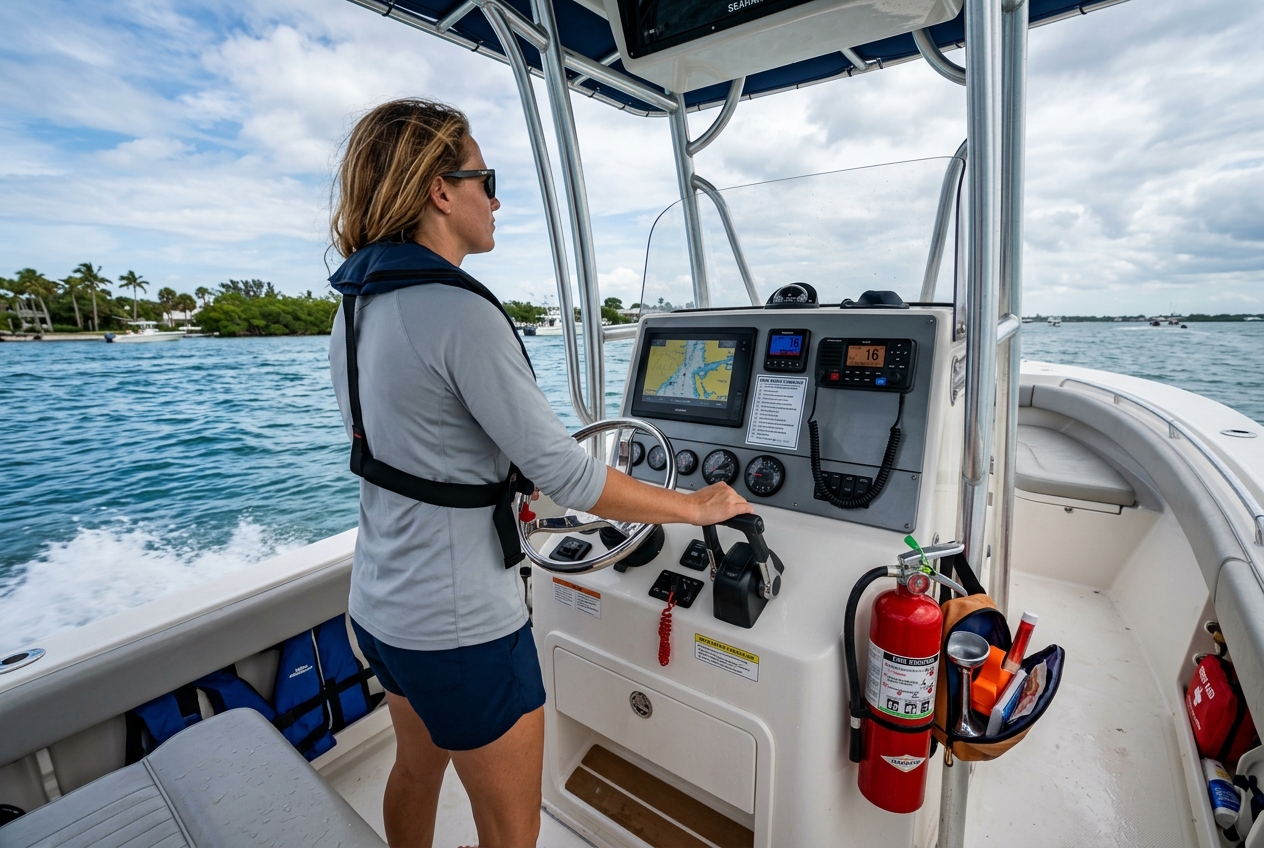
Start by inspecting your life jackets. Make sure you have enough Coast Guard-approved jackets for everyone on board and confirm they’re the right size for each person. The jackets should be in good condition with no rips or missing buckles. Having life jackets isn’t just good practice; it’s also required by Florida law for all passengers, especially children.
Next, examine your fire extinguishers. Depending on your boat’s size, you might need more than one. Ensure they’re in working order and placed in easily accessible spots. The pressure gauge should sit within the green zone, and the canisters should not be expired.
Your distress signals matter just as much. Flares and sound-producing devices like whistles or horns must be checked and functional. Keep an eye on expiration dates for flares since they lose effectiveness once expired. Sound devices should be loud enough to alert others in an emergency.
Keep a first aid kit onboard with up-to-date supplies, including basics like bandages, antiseptic wipes, and pain relievers. In Florida, where hot temperatures can cause dehydration or sunburn quickly, adding aloe gel and electrolyte tablets is also a smart move.
Finally, verify that your navigation lights work for any potential nighttime excursions. A faulty light can create dangerous situations by making your vessel less visible to others. This is especially true on Florida’s busy waterways, where weather can change rapidly and visibility drops without warning.
Routinely checking your equipment before each trip guarantees compliance with boating regulations and, more importantly, keeps everyone on board safe.
Understanding Weather Conditions
Understanding weather conditions before you set sail is one of the most important precautions you can take on Florida water. Florida weather can shift fast, and failing to prepare can put everyone on board at risk.
Always check weather reports before you leave the dock. Reliable local sources like the National Weather Service provide up-to-date forecasts including warnings about thunderstorms, hurricanes, or high winds. A clear sky at the dock does not mean a clear sky an hour offshore.
Monitoring the sky once you’re out is equally important. In Florida, darkening clouds, sudden temperature drops, or a sharp increase in wind speed can all signal an approaching storm. Florida storms can build and hit with surprising speed, so learning to read these signs is worth the effort.
Equip your vessel with the right tools. A marine VHF radio lets you receive real-time weather alerts and communicate with other vessels or the Coast Guard if needed. A reliable GPS system keeps you oriented and helps you adjust course quickly when conditions change.
Before you leave, tell someone on land your itinerary and expected return time. It’s a simple step, but it can make a real difference for search and rescue teams if you’re delayed by unexpected weather.
Know your limits and those of your vessel. When you’re uncertain about conditions, prioritize safety over pushing forward. These precautions help ensure that every trip on Florida’s beautiful waters stays as safe and enjoyable as possible.
Following Maritime Rules
Navigating a vessel carries real responsibility, and following maritime rules is a core part of keeping everyone on the water safe. Compliance isn’t just about avoiding fines; it protects you and every other boater around you.
Start with the navigational rules known as the “Rules of the Road” at sea. Established by the International Regulations for Preventing Collisions at Sea (COLREGs), these rules exist to prevent accidents and collisions. You should be familiar with signals, right-of-way, and speed limits under various conditions. Always maintain a speed that lets you react and stop safely, factoring in visibility, traffic density, and water conditions.
Florida waters are busy. Locals, tourists, fishing charters, and recreational boaters are all out there at the same time, which makes following navigational protocols even more critical. Pay close attention to buoys and markers; they direct traffic, identify safe passages, and flag dangerous areas.
Understanding these markers is part of responsible boating. In narrow channels, for example, power-driven vessels must keep to the starboard side to allow safe passage for others. When two boats approach from opposite directions, both should generally alter course to starboard, much like cars keeping right when passing each other on a two-lane road.
Never underestimate clear communication with other boats. Using the correct sound and light signals prevents the kind of misunderstandings that lead to accidents. A simple whistle or horn blast can make all the difference out on Florida’s waterways. By following these rules consistently, you contribute to a safer experience for everyone on the water. For additional boating safety tips, the American Boating Association is a great resource to bookmark.
Frequently Asked Questions
1. What are the critical safety checks before heading out on the water?
Before setting sail, conduct a thorough inspection of your boat. Check the engine and fuel levels. Verify that all navigation lights are operational. Inspect your communication devices like radios or cell phones. Make sure you have enough life jackets for every passenger on board. Review your emergency equipment, including fire extinguishers, throwable flotation devices, and first aid kits, to confirm everything is in place and functioning. Checking weather conditions before you leave is also essential.
2. How important is life jacket usage?
Life jacket usage is vital for everyone on board. In Florida, children under six must wear a life jacket at all times while the vessel is underway. Regardless of age, wearing life jackets significantly improves safety and can save lives in emergencies. Ensure life jackets are in good condition and properly fitted for all passengers. On Florida’s waters, where conditions can change swiftly, a life jacket is your most important piece of safety gear.
3. What steps should I take if I encounter bad weather while boating?
Stay calm and act quickly. Make sure all passengers are wearing life jackets. Turn on your navigation lights for visibility and reduce speed to lower the risk of wave damage. Head toward the nearest shelter or shore if possible, following a safe path. Keep communication open with the Coast Guard or local authorities for guidance. Let someone on land know your situation and location. Staying weather-aware before you leave gives you the best chance of responding quickly when Florida’s conditions turn.
Next Steps For You
Embracing the joys of boating in Florida means embracing a real commitment to safety on the water. With the right preparation and a little caution, every nautical adventure can be both enjoyable and secure. Check your safety gear before setting out, stay alert to changing weather, and stick to the navigational rules. Whether you’re exploring the serene coastlines near Palmetto or venturing farther afield, a mindful approach ensures the memories you make out there are ones you’ll actually want to keep.
When you’re ready to protect your vessel and everyone on board, boat insurance is a smart next step. Anderson Insurance Group is here to help you find the right coverage for your time on the water. Contact us today to get started.