Are Your Outdoor Valuables Ready for Florida’s Next Big Storm?
Living in the Sunshine State comes with its share of challenges, and one of the biggest is keeping your property safe when the wind picks up. If you haven’t taken steps to secure outdoor equipment before hurricane season hits, now is the time. Strong winds can cause serious damage to unsecured items, and whether you have a barbecue grill, garden furniture, or power tools, a little preparation goes a long way.
It’s not just about keeping your own property safe. Unsecured equipment can become hazardous projectiles that threaten people and nearby structures. The good news is that with some basic preparation, you can minimize the risks substantially. In the sections below, we’ll walk through practical steps to protect your outdoor equipment effectively, whether you’re a seasoned Floridian or brand new to the area.
Prioritizing Vulnerable Items
When strong winds approach, start by identifying the most vulnerable items in your yard. These are usually the ones that are lightweight, loosely placed, or not anchored down. Patio furniture, garden tools, and outdoor toys typically top that list. Chairs, tables, and large umbrellas might look stable on a calm day, but they can easily become airborne in high winds. Make it a priority to bring these indoors or into a secure shed.
Also consider the condition of each item. Older or worn equipment is generally more susceptible to damage, so check for rust, weakened joints, or any signs of wear that could cause failure under pressure. If you spot damage, address it promptly. Even a temporary fix like zip ties or duct tape can help hold things together until you’re able to do a proper repair.
Florida homes often have decorative tiles, garden statues, or potted plants that can turn dangerous if left unsecured. Place these on flat, stable surfaces and weigh them down with sandbags or stones where possible. For stacked items, tie or interlock them so the wind can’t topple them.
Pay attention to electronics and appliances too. Disconnect grills or pool heaters from power sources and move them to a sheltered spot. Trampolines deserve special attention since they’re notorious for catching wind. Disassemble them if you can, or anchor them using weight bags or specialized stakes designed for the sandy, loose soils common across Florida.
Taking the time to evaluate each item’s potential to cause or sustain damage protects your property and contributes to the safety of your whole neighborhood when a storm rolls through. For additional guidance on hurricane preparedness, the National Hurricane Center offers thorough resources worth reviewing.
Choosing Proper Storage Solutions
Choosing the right storage isn’t just about wind protection. It also prolongs the life of your belongings, which makes it worth doing right.
Start by evaluating the size and type of equipment you need to store. For larger items like grills or lawn mowers, a sturdy outdoor shed is often your best bet. A well-anchored shed handles strong winds far better than any temporary structure. Look for materials like reinforced wood or metal known for their resilience.
Short on space? A deck box or weatherproof storage chest works well for smaller items like cushions, gardening tools, or sports gear. Make sure the box is heavy-duty and has durable locks to prevent it from popping open mid-storm. Secure it against a wall or use ground anchors for extra stability.
For bikes or smaller lawn equipment, wall-mounted racks in a garage or carport keep things off the ground and out of the wind while preserving floor space. It’s a practical setup that pays off in a pinch.
Don’t overlook the storage units themselves. Anchoring a shed or fastening a deck box properly is just as important as what you put inside them. Inspect these structures regularly, especially after severe weather, and address any signs of wear before the next storm season arrives.
Tarps and covers are worth considering too. Choose ones that are heavy-duty and specifically rated for wind resistance, and make sure they’re fastened down securely rather than just draped over equipment. A cover that catches wind like a sail can do more harm than good.
Ultimately, the right storage solution comes down to balancing practicality, security, and the layout of your specific property. The University of Florida IFAS Extension offers additional homeowner guidance on preparing outdoor spaces for severe weather.
Using Anchors and Braces
Anchors and braces are among the most effective tools you have for keeping outdoor equipment in place during high winds. Even heavy furniture can become a projectile in a strong storm, and proper anchoring dramatically reduces that risk.
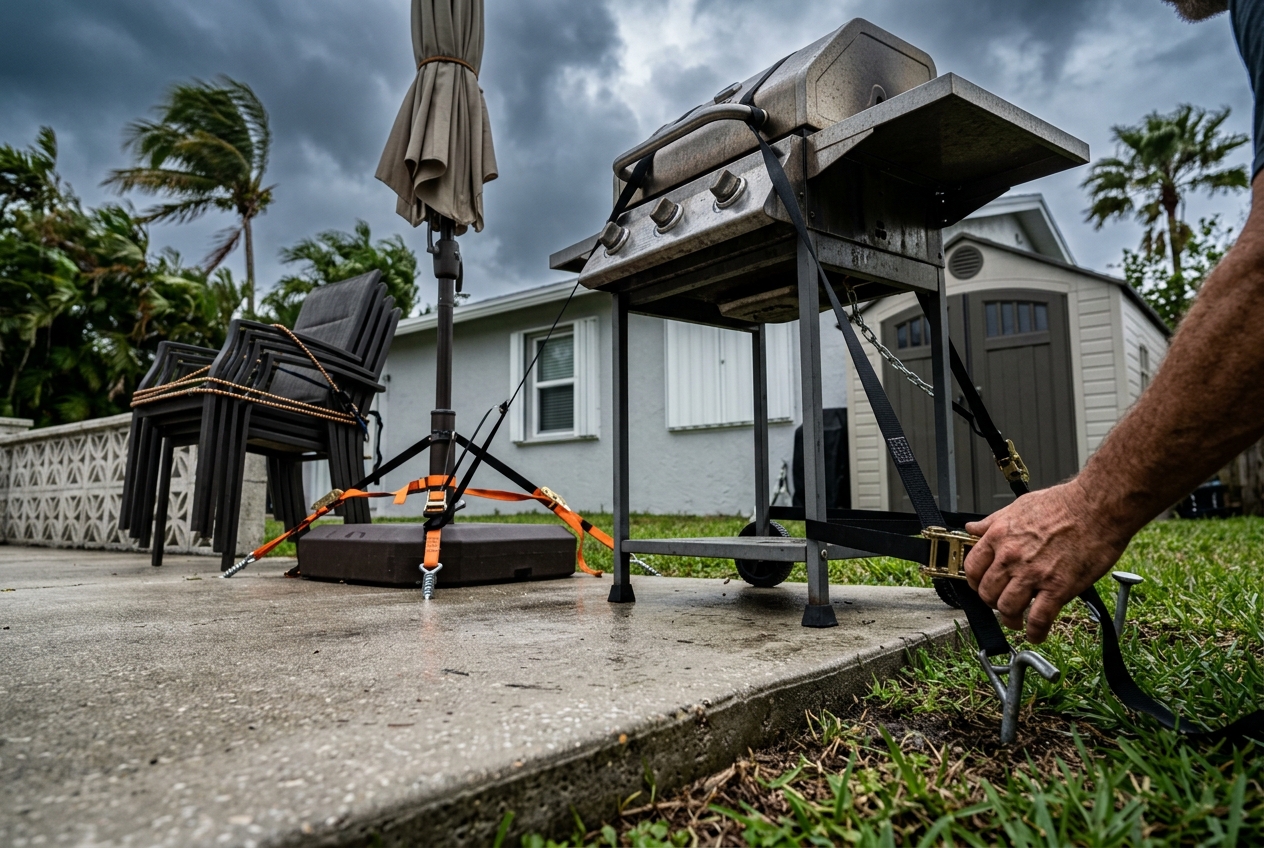
Start with the items most likely to move. Grills, patio umbrellas, and larger pieces of outdoor furniture are common culprits. Heavy-duty ground anchors, screwed directly into the ground, create a sturdy base. Pair them with weather-resistant straps or chains to keep items fastened securely. Drive the anchors deep enough to handle the high wind forces that are all too familiar here in Florida.
For structures like gazebos or pergolas, braces are your best friend. Metal brackets and fasteners can join these structures to anchored posts or concrete pads, adding real stability and preventing collapse during a storm. Your local hardware store will have a range of options. Just make sure whatever you choose is rated for high wind speeds.
Smaller items like garden tools and decorations cause more damage than people expect when they go airborne. A lockable shed or a set of tie-downs connecting them to anchored structures keeps them from becoming hazards. Securing these pieces protects your belongings, your home, and your neighbor’s property.
Investing time in anchoring and bracing now is far easier than dealing with repairs after a storm. Also worth doing: reviewing your home insurance policy to understand how wind damage coverage applies to your situation, since the details vary more than most people realize.
Frequently Asked Questions
What outdoor items are most at risk during strong winds?
Patio furniture, grills, potted plants, garden decorations, and children’s play structures are particularly vulnerable. These items can easily become projectiles if not properly secured. In Florida, where strong winds and hurricanes are a regular reality, it’s worth assessing these items at the start of every storm season.
What methods are most effective for securing outdoor equipment?
Start by bringing smaller items indoors before a storm arrives. For larger furniture, use heavy-duty straps or bungee cords to anchor them to the ground or a stable structure. Stack chairs and tie down any covers. Move grills close to a wall for added stability. Group potted plants together in a wind-sheltered area. The key is acting well before the storm, not scrambling at the last minute. Consumer Reports also has a practical guide on hurricane preparation that covers many of these same steps.
Are there permanent solutions for wind protection?
Yes. Installing a windbreak like a sturdy fence or hedge can reduce wind speed across your property. Built-in options like ground anchors or bolted-down furniture are also worth considering if you regularly store items outdoors. Review your insurance policy too, since coverage for wind damage varies by carrier and policy type. FEMA’s flood and severe weather resources are a helpful reference for understanding broader property protection strategies.
Next Steps
Securing your outdoor equipment comes down to three things: knowing which items are most vulnerable, choosing the right storage solutions, and using anchors and braces where needed. Whether that means bringing items inside, investing in durable storage, or staking down heavy furniture, each step reduces the chance of damage and keeps your neighborhood safer too. Make a habit of evaluating your setup before each storm season. Florida’s weather doesn’t always give you much warning, but a little preparation now makes a real difference when the winds pick up.
If you have questions about how your current coverage protects your property, the team at Anderson Insurance Group is ready to help. Contact us to review your policy and make sure you’re covered before the next storm season arrives.