Are your vehicles ready for hurricane season? In Florida, hurricanes bring high winds, heavy rain, and serious risk — and while most people focus on their homes, vehicle protection deserves just as much attention. With the right precautions, you can reduce the risk of damage whether you’re in Palmetto, Tampa, or anywhere else in the Sunshine State.
Your car might look sturdy, but it’s vulnerable to more than you’d expect during a hurricane. Flying debris, flooding, and saltwater exposure near the coast can all leave you with hefty repair bills. The good news is that there are practical steps you can take to protect one of your most valuable assets.
In this blog, we’ll walk you through how to safeguard your vehicles when a storm threatens. We’ll cover everything from basic preparation tips to insurance coverage specifics in Florida. A little planning can go a long way.
Choosing Safe Parking Locations
Finding a safe parking spot is one of the most important decisions you’ll make when a hurricane approaches. The right choice can make a real difference, especially given how often Florida gets hit.
If you have a garage, use it. A garage shields your vehicle from windborne debris and water damage. Just make sure it’s not so cluttered that you can’t actually fit your car inside — that’s a more common problem than you’d think.
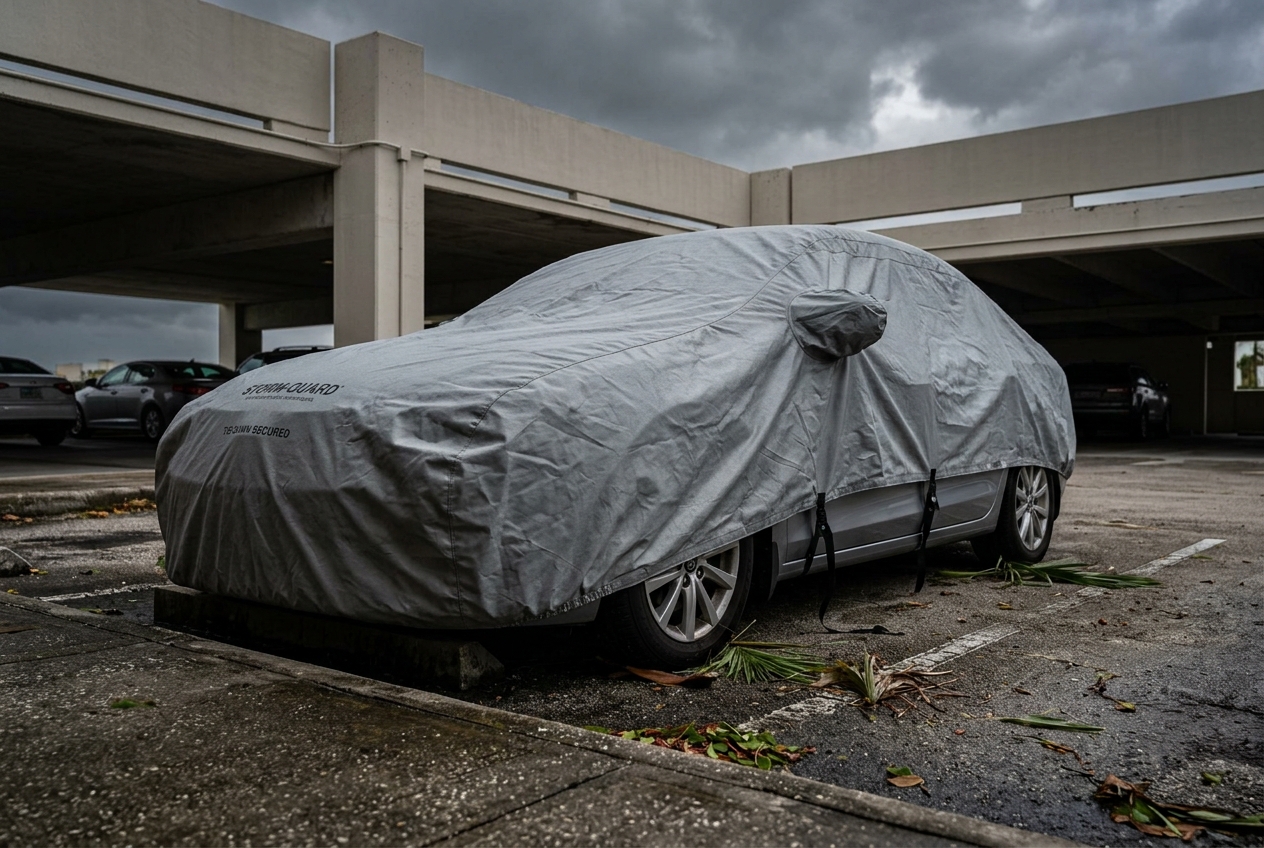
If a garage isn’t an option, look for a nearby parking structure. Multi-story garages offer solid protection on upper levels, keeping your vehicle above potential floodwaters. In Palmetto and surrounding areas, these spots fill up fast once a hurricane warning is issued, so don’t wait to secure one.
Avoid parking under trees or power lines. During high winds, branches snap and lines fall, and either one landing on your car can cause serious damage. Look for open areas away from those hazards instead.
You might be tempted to park close to home for convenience, but think carefully about your flood risk. In flood-prone zones, higher ground is worth the extra distance. Local public parking lots on elevated terrain can be a smart alternative. The Florida Division of Emergency Management offers detailed preparedness guidelines that can help you identify safer areas in your region.
For an added layer of vehicle protection, invest in a high-quality car cover rated for harsh weather. It won’t guarantee your car survives an extreme storm, but it does add real defense against flying debris and rain.
Parking decisions require some thought, but in Florida, where hurricanes are a regular fact of life, a little planning ahead can make a significant difference for your vehicle.
Securing Loose Items
Securing loose items around your vehicle is a step that’s easy to overlook and costly to skip. High winds can turn everyday objects into projectiles, and anything airborne near your car is a threat.
Walk around the area immediately surrounding your vehicle and look for anything that isn’t firmly anchored — patio furniture, garden tools, toys, decorative items. Store them indoors if you can. If that’s not possible, heavy-duty straps or bungee cords are a reasonable backup.
If you have a carport or open garage, the same logic applies to anything stored there. Portable garages made of lightweight materials can become a problem in high winds if they’re not properly anchored. Check that any covers or tarps are secured tightly and that the structure itself is fastened to the ground.
Take a look at nearby trees, too. You can’t control what a tree does in a storm, but trimming weak or overhanging branches before the season starts can reduce the risk of debris landing on your car. Loose palm fronds are a particular concern in Florida.
Think about where your car is pointed, as well. Parking away from overhanging branches or loose gravel piles can prevent damage that might otherwise feel unavoidable.
These steps won’t make your vehicle storm-proof, but they meaningfully reduce the chances of substantial damage. One more thing worth doing: check your auto insurance policy or call your insurer to understand exactly what storm-related vehicle damage your coverage includes.
Using Protective Covers
A good car cover is a practical and affordable line of defense when a hurricane is coming. It won’t protect against everything, but it’s one of those precautions that’s easy to take and worth having in your arsenal.
Start by choosing the right cover. Look for options labeled hurricane-resistant or heavy-duty. These are typically waterproof and built to hold up against flying debris and rain. Cheap covers tend to tear in high winds, so this is one area where it pays to spend a little more. Consumer Reports offers helpful reviews and recommendations for car covers built to handle extreme weather conditions.
Fit matters. A cover that’s too loose will flap against your car’s surface and can cause scratches or paint damage over time. Measure your vehicle and check the cover’s dimensions before you buy.
Securing it properly is just as important as choosing the right one. Use the built-in grommets, tie-down points, straps, or bungee cords to keep it locked in place. Even a well-made cover won’t do much good if the wind pulls it off in the first hour.
Where you park still matters even with a cover on. A garage or carport is always the better option. If that’s not available, choose a spot away from falling branches and other debris sources.
Before hurricane season starts each year, inspect your cover for fraying, tears, or weak spots. A damaged cover won’t hold up when you actually need it. If it’s worn out, replace it before the season gets going rather than finding out the hard way during a storm.
Protective covers are a simple, low-cost step that can make a real difference. Just pair them with a solid understanding of your insurance policy so you know what protection you actually have if things go wrong. The Insurance Information Institute is a useful resource for understanding how vehicle coverage applies during hurricanes and other natural disasters.
Frequently Asked Questions
What are the safest ways to store a car during a hurricane?
Storing your vehicle in a secure garage offers the best protection during a hurricane. A sturdy structure can shield your car from flying debris and heavy rainfall. If a garage isn’t available, use a car cover designed for storms. For extra protection, place sandbags around the tires and cover windows with blankets or cardboard to minimize potential glass breakage. Always disengage the parking brake and avoid parking under trees or power lines.
Should vehicles be moved to high ground?
Yes, relocating your vehicle to higher ground can help prevent flood damage. Hurricanes often bring heavy rains that lead to flash flooding in low-lying areas. Elevating your vehicle to a safer location can make a significant difference. Look for parking garages or other safe, elevated spots nearby that are less prone to flooding. The National Hurricane Center provides up-to-date storm tracking and surge data that can help you make informed decisions about when and where to move your vehicle. Just be sure the area is safe and away from potential debris.
Is leaving a car behind during an evacuation ever advisable?
Leaving a car behind during an evacuation might be unavoidable, especially if you have limited time or resources. Prioritize your safety and follow evacuation orders promptly. If you must leave your car, ensure it’s parked well away from flood zones and potential hazards. You can mitigate risks by taking precautions such as disabling the electronics and securing the vehicle as thoroughly as possible. Personal safety should always come first.
Next Steps For You
As hurricane season approaches, taking a few key steps can protect your vehicles from the threats Floridians know all too well. Choosing safe parking locations, securing loose items, using protective covers, and understanding your insurance coverage all work together as part of a well-rounded preparation plan. By thinking ahead, you give your vehicle the best possible chance of coming through a storm intact. Anderson & Associates can provide guidance specific to the conditions here in Palmetto and across Florida — reach out before the next storm is on the radar.