After a Storm: How to Navigate the Insurance Claim Process
After a storm tears through your neighborhood, the last thing you want is to fumble through the insurance claim process while still picking up the pieces. Handling the aftermath can feel overwhelming, especially when it’s time to file. Here in Florida, where hurricanes and strong storms are a part of life, understanding the claim process lets you act swiftly and confidently.
The insurance claim process is your pathway to recovery, whether you’re dealing with minor wind damage or more severe destruction. To make the most of your policy and speed up your recovery, you need to be well-prepared and informed. It’s all about knowing what to document, whom to contact, and what steps will keep your claim moving. The specifics of what’s covered can vary depending on your policy and insurance carrier, so reviewing your documents thoroughly matters more than most people realize.
In this article, we’ll walk you through the key steps to take following a storm, from initial damage assessments to finalizing your claim. Whether you’re securing your home, mobile home, or business, the right preparation and knowledge can make a significant difference in your post-storm recovery.
Initial Checklist for Claims
After a storm hits, figuring out where to start with property damage can feel paralyzing. The first step in the insurance claim process should be to establish safety. Before anything else, ensure there are no immediate hazards such as downed power lines, unsafe structures, or floodwaters around your home. Once you’re sure it’s safe, start documenting the damage as soon as possible. This will be important for your claim.
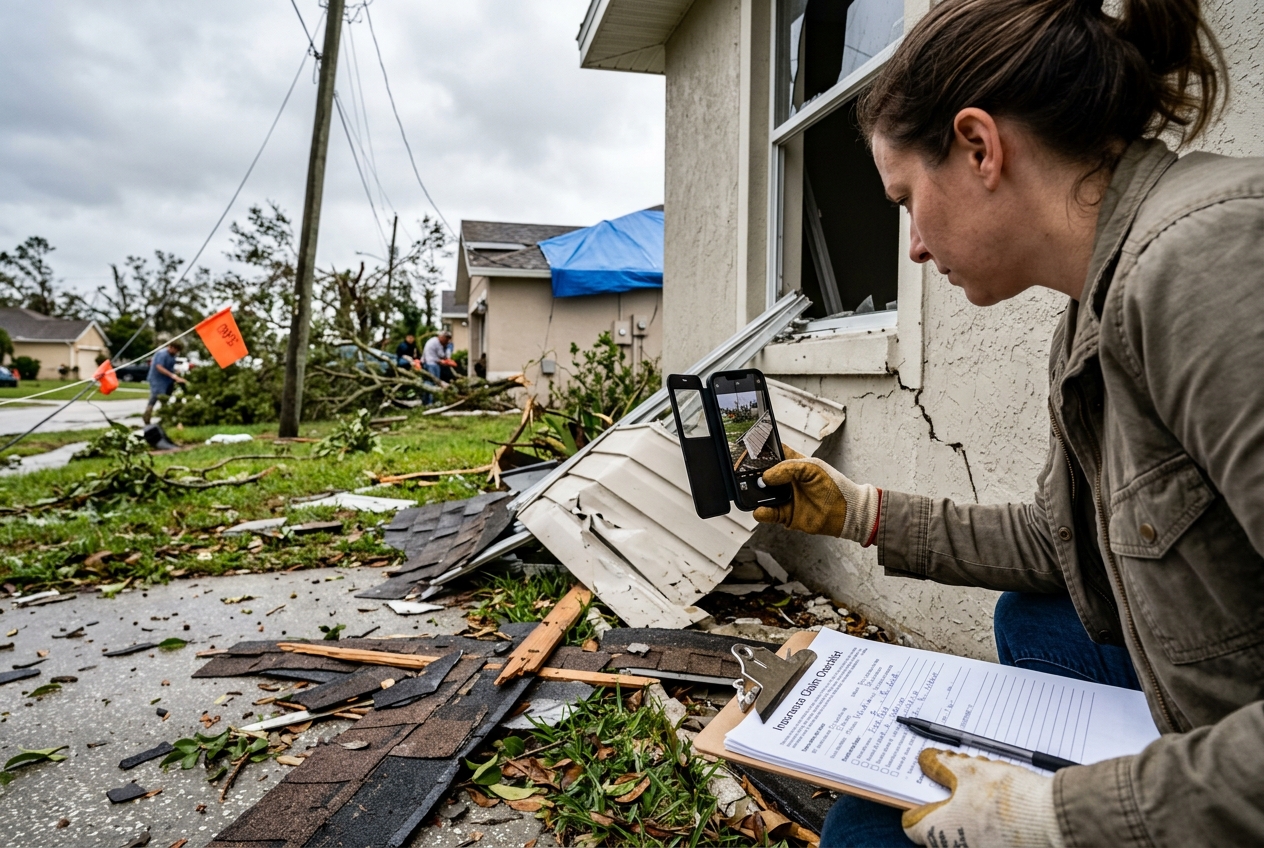
Taking photos and videos of the affected areas is crucial. Capture images from multiple angles to provide a comprehensive view of the damage. Include close-ups of specific damage as well as wider shots showing the entire property. This documentation will support your claim and help adjusters understand the extent of the loss.
Next, make a list of damaged items. Include a description, estimated value, and any receipts or purchase information if you have them. Keep this list organized because it will be genuinely useful when you file.
Do not start any major repairs until you talk with your insurance company, but take immediate steps to prevent further damage. If you have broken windows, covering them with tarp or plywood can stop more water from getting in. Save receipts for all materials purchased for temporary repairs, since these costs are often reimbursable as part of the claims process.
Contact your insurance provider as soon as you’ve assessed the damage and secured your property. Let them know you’ll be filing a claim and ask about their specific process moving forward. Every insurance company handles claims a little differently, so getting direct instructions is worth the call.
Coverage varies by policy and carrier. Review your policy to know what is covered and the applicable deductibles. In Florida, policies may vary significantly based on wind and flood coverage, so make sure you understand those elements specifically. Taking these initial steps can streamline the insurance claim process and set you on the path to recovery.
Providing Documentation
Thorough documentation is the backbone of any successful storm claim. After a storm passes through Florida, assessing the damage and gathering detailed evidence is where your recovery really begins. This documentation will support your claim and help your insurance adjuster understand the full scope of your loss.
Start by taking clear photographs or videos of all damage. Capture the exterior of your home, focusing on the roof, windows, and siding. Document the interior too. Ceilings, flooring, and personal belongings can all take a hit from water intrusion, and those details matter. Take photos before any cleanup begins. That way, you preserve the true condition of your property right after the storm, not after you’ve already started tidying up.
Make a written inventory of damaged items. Include detailed descriptions such as the brand, model number, and approximate purchase date. If you have receipts or any previous photos of these items in their original condition, include them as well. These can go a long way in proving the value of your possessions to the insurance company.
Keep any estimates from contractors or repair professionals. These assessments give the insurance company a realistic picture of repair costs. That said, don’t begin any permanent repairs until your insurance company has reviewed the damage. Temporary fixes like tarping a roof or boarding up windows are fine to prevent further damage, and those expenses may also be reimbursable. Save every receipt.
Maintain all correspondence with your insurer too. Note the date and time of conversations, along with the names of any representatives you speak with. Keep emails or letters organized so you can refer back to them if needed. The National Association of Insurance Commissioners offers additional guidance on navigating the claims process as a consumer.
Managing your documentation carefully paves the way for a smoother claim experience. Strong, comprehensive evidence helps move things forward and reduces the chances of delays or disputes during the storm recovery phase.
Working with Adjusters
Working with an insurance adjuster is often one of the most important parts of getting your claim resolved after a storm. Adjusters assess the damage and determine how much your policy will cover based on your specific coverage. Here’s how to make that interaction as effective as possible.
Be available to meet with the adjuster when they visit your property. It’s worth scheduling a time you can both commit to, and you should plan to be present during the inspection. Being there allows you to provide context about how and when the damage occurred, which helps them assess the situation accurately. Bring a copy of your home insurance policy so you have an easy reference for what’s covered.
Before the adjuster arrives, document everything thoroughly. Take clear, labeled photos of all damage and put together a list of everything affected by the storm. Think of it like showing your work on an exam. The more organized your evidence, the easier it is for the adjuster to see the full picture. This preparation keeps your records aligned with their assessment from the start.
Ask the adjuster any questions you have as they examine the damage. Find out what steps they’ll take next and how their evaluation affects your claim. Ask how long it typically takes to process a storm damage claim and when you might expect a resolution. That timeline helps you plan for temporary repairs or alternate accommodations if you need them.
Adjusters are not responsible for authorizing coverage or payments, but their evaluations carry real weight in how your claim unfolds. Offer detailed information openly, even if something seems minor. Trust and transparency go a long way.
In Florida, storm damage claims can involve added complexity around wind or flood coverage. The Florida Division of Emergency Management provides recovery resources specific to Florida residents that can be helpful during this phase. Regular communication with your adjuster should keep things on track and move you closer to the recovery you need.
Frequently Asked Questions
What is the first step in filing a storm-related claim?
Contact your insurance provider as soon as possible to report the damage. Provide a clear description of the damage and note the date and time the storm occurred. Review your insurance policy to understand your coverage specifics, as they can vary.
What documentation is required for a smooth claims process?
You’ll need to gather evidence of the storm damage. Take photos or videos of the affected areas of your property. A list detailing all damaged items, along with any receipts for repairs or replacements, is also helpful. Keep all communication with your insurer recorded and organized. Documentation is what keeps your claim moving efficiently. The Insurance Information Institute offers a detailed breakdown of what to expect when filing a homeowners insurance claim after a disaster.
How can I work effectively with insurance adjusters?
Be available for scheduled inspections and bring all relevant documentation. Clearly explain the extent of the damage and answer questions accurately. Adjusters are there to help determine coverage, not to challenge what you’ve experienced. If something is unclear, ask for clarification. Taking notes during these interactions is a smart habit.
Next Steps For You
Handling a storm’s aftermath is never easy, especially when managing insurance claims. By prioritizing safety, documenting damage thoroughly, and contacting your insurer promptly, you’ll be in a much stronger position to move things forward. Keep organized records and stay in close contact with your insurance adjuster. Those two habits alone can clarify your coverage and speed up your resolution. Florida storms come with their own set of challenges, but with solid preparation and clear communication, you can work through the claim process and get your recovery started with confidence. If you’re unsure whether your current coverage is the right fit, Anderson Insurance Group is here to help you review your options and make sure you’re protected before the next storm arrives. You can also review FEMA’s preparedness resources to ensure you’re ready well before severe weather strikes.