Are You Ready for Hurricane Season? Insurance Questions Every Florida Homeowner Should Ask
Living in Florida means hurricanes aren’t a matter of if — they’re a matter of when. With storms capable of bringing catastrophic wind and water damage, knowing what your policy actually covers is one of the most important things you can do before the season starts. Homeowners constantly find themselves wrestling with insurance questions about what’s protected, what isn’t, and how to avoid getting caught off guard after a storm.
In this article, we’ll address the most common insurance questions that come up as hurricane season approaches. From what a standard homeowner’s policy typically covers to why flood insurance is a separate conversation entirely, having the right information helps you make smarter decisions. Coverage varies by policy and carrier, so always review your specific situation with your insurance agent. Here in Palmetto, Florida, we know how vital peace of mind is before the winds pick up.
Understanding Key Insurance Terms
Understanding key insurance terms can feel like learning a new language, especially when you’re facing insurance questions about hurricanes in Florida. Here, we’ll make some of these terms more accessible — specifically the ones that matter when the forecast turns stormy.
Deductible
This is the amount you’re responsible for paying out of pocket before your insurance kicks in. In Florida, many homeowners policies include a separate deductible for hurricane-related damages. Knowing the difference between your standard and hurricane deductibles matters because they can significantly affect how much you’ll need to cover after a storm.
Coverage Limits
Coverage limits are the maximum amounts your policy will pay for a covered loss. When thinking about hurricane season, make sure you know the limits for both your dwelling and personal property. If your property values have changed, your coverage limits may need updating too.
Exclusions
These are specific conditions or circumstances your policy won’t cover. Many Floridians are surprised to discover that standard home insurance doesn’t cover flood damage, which is a serious concern during hurricanes. Understanding what’s excluded helps you decide whether additional policies like flood insurance are necessary.
Additional Living Expenses (ALE)
If a hurricane makes your home temporarily uninhabitable, ALE can help cover hotel bills, meals, and other costs you wouldn’t normally have. Think of it as a financial buffer while your home is being repaired. Reviewing your ALE provisions now can prevent real financial strain later.
Windstorm Insurance
Some policies include windstorm coverage; others require a separate policy altogether. This coverage specifically addresses damage caused by high winds, which is one of the most common issues during hurricanes. Check whether your current policy includes it, and bring any remaining insurance questions to your agent if it doesn’t.
Understanding these terms helps you ask better insurance questions and make sure your policies provide the protection you actually need during hurricane season in Florida. Coverage varies by policy and carrier, so consult with your agency to clear up any uncertainties.
Preparing for Insurer Communication
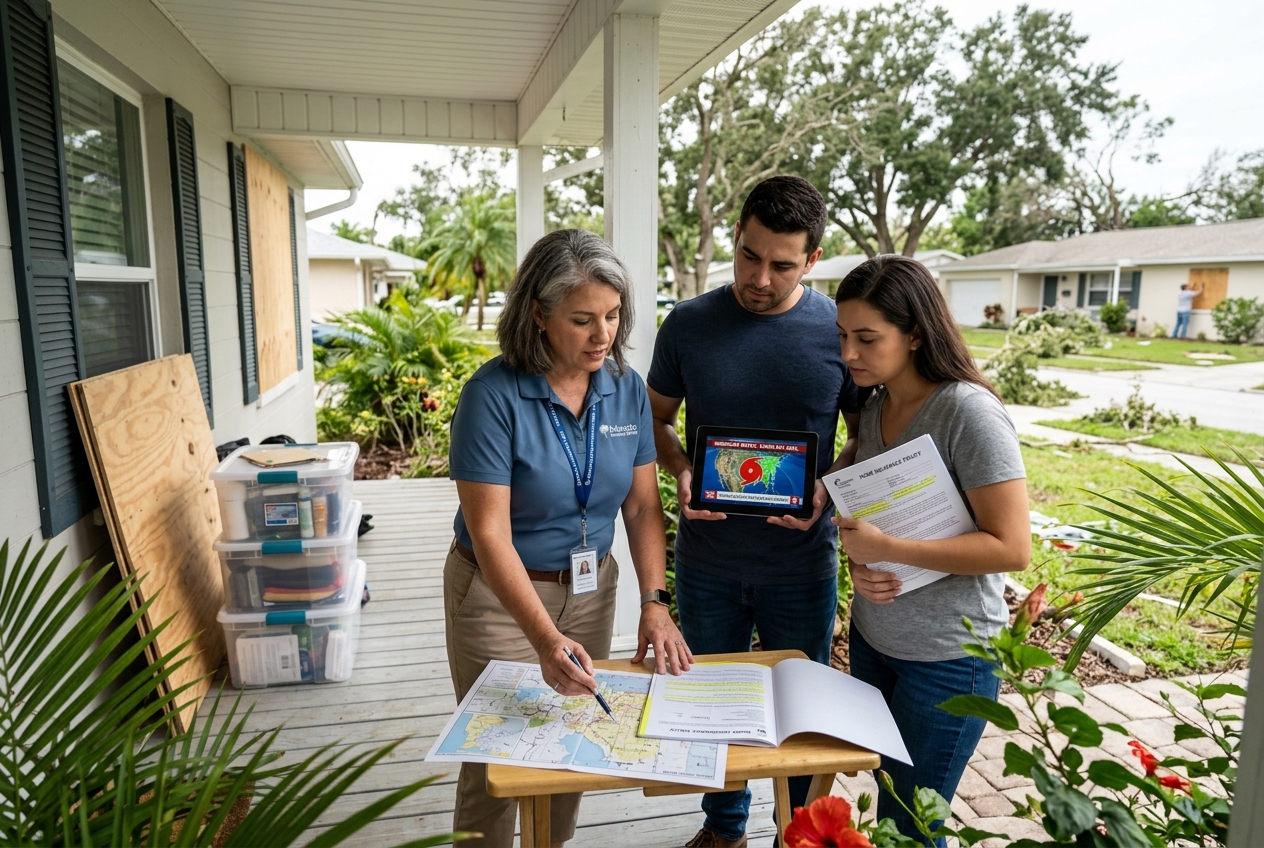
Effective storm preparation involves more than stocking up on water and batteries. Clear, proactive communication with your insurer is just as important. If a hurricane is heading toward Florida, you want to be ready to handle any potential claims without scrambling.
Before the storm, review your policy and understand your coverage. Know your deductibles for hurricane and wind damage, since policies in Florida commonly have separate deductibles for hurricane-related claims. Confirming these details early prevents misunderstandings when it matters most.
Once you have a firm grasp on your policy, organize your important documents. Make copies of your insurance policy, recent payments, and any proof of storm preparation efforts like receipts for materials or services. Store these in a waterproof bag or securely in the cloud. Having this information readily available will streamline your claims after the storm passes.
Prepare a list of key contact numbers as part of your storm prep. Keep your insurance agent’s name and number handy, along with your insurer’s claims department. Many insurers offer a 24/7 claims line, so confirm that number before you need it.
Photographs are also valuable. Take pictures or videos of your property before the storm, focusing on the roof, siding, and foundation. These visuals document the pre-storm condition of your home and can be critical to efficient claims processing. The National Hurricane Center’s hurricane preparedness resources offer additional guidance on steps to take before a storm arrives.
Talk to your insurer about the claims process itself. Some insurers have apps or online platforms that let you file and track claims quickly, which is especially helpful if power outages limit communication after a storm. Knowing how to use those tools ahead of time makes a real difference.
Finally, consider putting together a list of vetted repair professionals. Having contacts for roofers, electricians, or general contractors means you’re not searching for help while everyone else in the neighborhood is doing the same thing. That kind of foresight speeds up recovery and reduces stress considerably.
Managing Claims After the Event
Once a hurricane has passed, managing your insurance claim becomes the priority. A solid understanding of your policy beforehand makes this process much smoother. Here’s how to approach it.
First, assess any damage safely. Downed power lines, broken glass, and unstable structures are serious hazards. Once it’s safe, photograph and video the damage thoroughly before moving or repairing anything. That documentation is essential when filing a claim.
Contact your insurance agent as soon as possible to report the damage. Coverage can vary significantly from one policy to another, so having a clear understanding of your policy will help set realistic expectations and keep communication with your agent productive.
Whether you’re dealing with home or auto insurance, know what your specific policy covers. Standard policies in Florida typically don’t include flood damage, for example. You’d need separate flood insurance for that. The Florida Office of Insurance Regulation offers helpful guidance on understanding homeowners insurance policies specific to Florida. Knowing these distinctions helps you avoid frustration and figure out your next steps.
Be ready to provide detailed information: the time and date of the event, a description of the damage, and whether you’ve made any temporary repairs. Keep all receipts for emergency repairs, since insurers often require documentation of those costs.
After you file your claim, the insurance company will send an adjuster to assess the damage. Your documentation from right after the storm will be especially helpful at this stage. Keep a copy of your policy nearby during the adjuster’s visit so you can verify coverage details and ask questions on the spot.
Managing claims after a hurricane is stressful, but with solid policy knowledge and a bit of preparation, you can navigate the process more confidently and focus on getting back to normal.
Frequently Asked Questions
What questions should I ask my insurer about hurricane coverage?
When preparing for hurricane season in Florida, clarifying your coverage upfront saves a lot of headaches later. Here are some key questions to bring to your insurer:
- Does my policy include hurricane or windstorm coverage?
- What are my deductibles for hurricane-related damage?
- Are there any exclusions or limitations specific to hurricanes?
- Does my policy cover additional living expenses if my home becomes uninhabitable?
- Is flood insurance required or recommended, and is it included in my current policy?
- How will my claims be processed if a hurricane occurs?
- Are there any steps I need to take before a storm to ensure full coverage?
How can I better understand my policy’s hurricane terms?
Understanding your insurance policy can be challenging, but knowing your coverage details saves time and stress when it matters most. Here’s how to make sense of it:
- Request a policy summary from your agent that highlights key hurricane-related terms.
- Pay close attention to sections titled “Exclusions,” “Declarations,” and “Conditions.”
- Ask your insurer to explain any terms that aren’t clear.
- Look for any mention of waiting periods or deadlines that could affect your claims.
- Schedule a review meeting with your insurance agent for a detailed walkthrough of your coverage.
Why might claims get denied after a hurricane?
Nobody wants to think about a denied claim, but understanding why it happens helps you avoid it. The Insurance Information Institute’s hurricane insurance FAQ is a great resource for understanding common coverage issues. Other frequent reasons for denied claims include:
- Inadequate documentation of damage or delayed filing.
- Flood damage that requires separate flood insurance not included in the standard policy.
- Claims involving items or scenarios not covered by the policy.
- Pre-existing conditions, like a roof already in disrepair before the storm.
- Failure to follow policy rules, such as not securing the property before the storm or after the damage occurred.
Staying informed and proactive puts you in a much better position when hurricane season hits Palmetto, Florida. Review and update your home insurance regularly to keep it aligned with your current needs.
Next Steps For You
Navigating hurricane insurance in Florida takes more than a quick glance at your policy. As storm season approaches, a firm understanding of your coverage can make a real difference in both your peace of mind and your ability to recover. Knowing your deductibles, coverage limits, and exclusions empowers you to make informed decisions and ensures your home and belongings are properly protected. Open communication with your insurer and careful documentation can take a lot of the friction out of the claims process if a hurricane does hit your area. Review your policies regularly, ask your agent about anything unclear, and don’t wait until a storm is in the forecast. Reach out to Anderson Insurance Group today — the preparation you do now is what makes recovery possible tomorrow.