The Importance of Renters Insurance
Most renters assume their landlord’s insurance has them covered. It doesn’t.
Your landlord’s policy protects the building itself — but your belongings, your liability, and your temporary living costs if something goes wrong? Those are entirely on you. That’s where renters insurance basics come in, and understanding them could save you from a genuinely awful situation.
Renters insurance is one of the most affordable and most overlooked forms of financial protection available. A typical policy costs somewhere between $15 and $30 a month, yet surveys consistently show that fewer than half of renters in the U.S. carry it. The people skipping it usually fall into one of two camps: they think they don’t own enough stuff to bother, or they assume it’s more complicated than it’s worth. Neither is true.
A standard renters insurance policy covers three core things. First, your personal property, meaning your furniture, electronics, clothes, and other belongings, if they’re damaged or destroyed by a covered event like fire, theft, or certain water damage. Second, liability protection if someone is injured in your home and decides to sue you. Third, additional living expenses if your unit becomes uninhabitable and you need to stay somewhere else temporarily. Think of it this way: if a kitchen fire forced you out of your apartment tomorrow, renters insurance is what keeps that disaster from also becoming a financial crisis.
What it doesn’t cover is equally worth knowing. Flooding and earthquakes are almost universally excluded from standard policies. If you live somewhere prone to either, you’ll need separate coverage. High-value items like jewelry, collectibles, or expensive camera equipment may also exceed standard policy limits and require a scheduled endorsement, which is essentially a rider that covers a specific item for its appraised value.
One detail that trips people up is the difference between actual cash value and replacement cost coverage. Actual cash value pays out what your item was worth at the time it was damaged, factoring in depreciation. Replacement cost coverage pays what it would actually cost to replace it with something comparable today. If your three-year-old laptop gets stolen, actual cash value might get you $400. Replacement cost might get you $900. The premium difference between the two is usually small. The payout difference is not.
Assessing Personal Property Needs
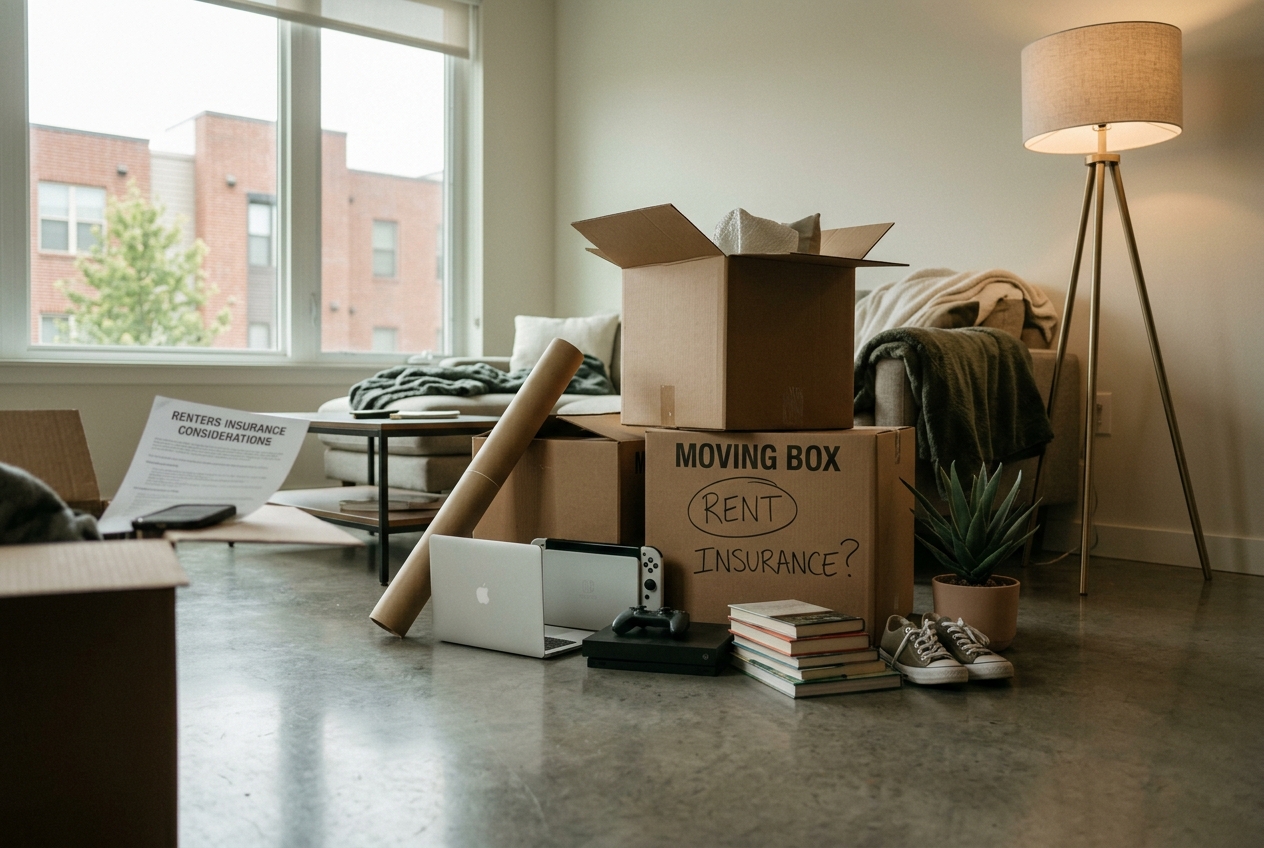
Before you shop for a policy, take stock of what you actually own. Most people dramatically underestimate the value of their belongings until they sit down and add it up. Go room by room. Your couch, bed frame, mattress, TV, laptop, gaming system, kitchen appliances, clothing, shoes, books, and anything else you’d genuinely need to replace if everything was gone tomorrow. For most renters, that number lands somewhere between $20,000 and $30,000, sometimes higher.
Once you have a rough total, that figure becomes your personal property coverage limit. You want your policy limit to meet or exceed it. Choosing an arbitrarily low limit because it drops your premium by a few dollars a month is a false economy. If you suffer a total loss and you’re underinsured, you absorb the difference out of pocket.
Document what you own. This doesn’t have to be elaborate. A video walkthrough of your apartment, narrated as you go, stored somewhere you can access if your unit is destroyed (a cloud backup, not just your laptop) is genuinely useful if you ever need to file a claim. Some people keep receipts for big purchases. Either approach works. The goal is simply to have evidence of what you owned and roughly what it was worth.
Pay attention to coverage limits for specific categories. Many policies cap payouts for electronics, jewelry, or musical instruments at amounts well below your actual exposure. A photographer with $5,000 in camera equipment covered under a policy with a $1,500 electronics sub-limit has a gap worth closing with a scheduled endorsement. The National Association of Insurance Commissioners offers helpful guidance on understanding these limits and making informed coverage decisions.
Evaluating Liability Coverage
Liability coverage is the part of renters insurance that people think about least and need most when something goes wrong.
Here’s the scenario: a friend comes over, slips on a wet floor, breaks their wrist, and ends up with $15,000 in medical bills. Whether or not you feel responsible, they or their insurer may come after you for those costs. Without liability coverage, you’re paying that out of savings, or worse, out of a judgment against you. With liability coverage, your insurer handles it up to your policy limit.
Standard policies typically offer $100,000 in liability coverage. That sounds like a lot until you consider that a single injury claim or lawsuit can easily exceed it. Many insurers let you increase that limit to $300,000 or $500,000 for a modest additional premium. If you have meaningful assets or income to protect, the upgrade is worth considering.
Liability coverage also typically extends beyond your apartment walls. If your dog bites someone at the park, or you accidentally damage someone else’s property, your renters policy may respond. Check your policy language on dog breed exclusions specifically. Some insurers exclude certain breeds entirely, which is worth knowing before you assume you’re covered.
Medical payments to others is a related but separate piece. It covers minor medical costs for guests injured in your home regardless of fault, typically in the $1,000 to $5,000 range. It exists to handle smaller incidents without a formal liability claim, which keeps things cleaner for everyone involved.
Frequently Asked Questions
Is renters insurance required?
Landlords can require it as a condition of your lease, and many do. Even when it’s not required, the cost-to-benefit ratio makes it hard to justify skipping.
Does renters insurance cover roommates?
Generally, no. Most policies only cover the named insured and immediate family members living in the same household. Roommates typically need their own separate policies.
What does “loss of use” mean?
Loss of use, sometimes called additional living expenses, covers the cost of temporary housing, meals above your normal spending, and related costs if your unit becomes uninhabitable due to a covered event.
How do I file a claim?
Contact your insurer as soon as possible after the loss. Document the damage with photos or video before anything is moved or repaired. Provide an itemized list of what was lost or damaged. Your insurer will assign a claims adjuster to evaluate and process it.
Will filing a claim raise my rates?
It can. Frequency of claims matters more than a single incident in most cases, but even one claim can affect your premium at renewal. It’s worth weighing the claim value against your deductible and the potential rate impact before you file for smaller losses.
Next Steps For You
If you don’t have renters insurance, get a quote this week. It takes about ten minutes and costs less than most people expect.
If you already have a policy, pull it out and read the declarations page. Confirm your personal property limit actually reflects what you own. Check whether you have replacement cost or actual cash value coverage. Look at your liability limit and decide if it’s adequate. Look for any category sub-limits that might leave you underinsured on specific items.
Then do a quick home inventory if you haven’t already. A phone video works fine. Store it somewhere other than the device you filmed it on.
Renters insurance won’t prevent bad things from happening. But it puts you in a position to recover from them without it turning into something much worse. If you have questions about finding the right coverage, the team at Anderson Insurance Group is ready to help you sort through your options.