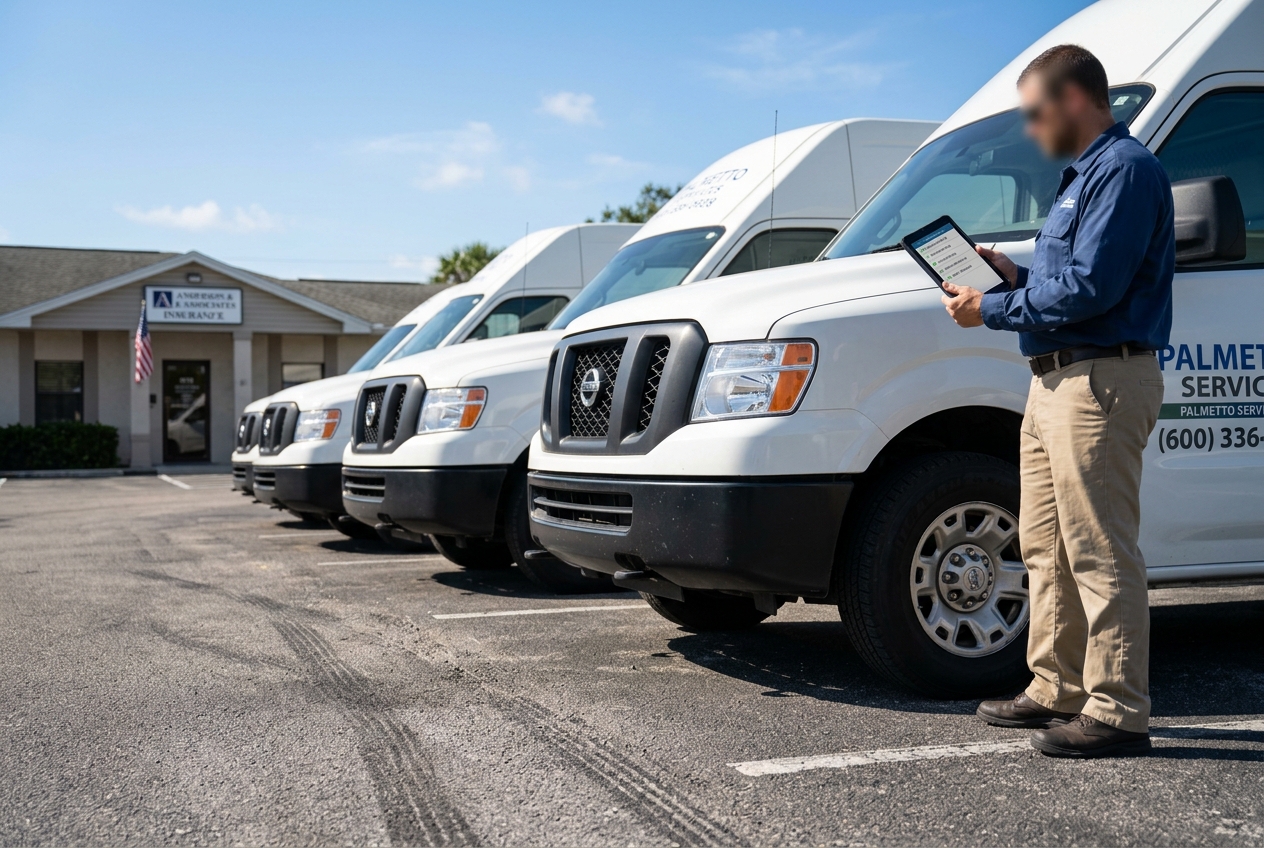
How many of your work vans are on Palmetto roads right now, and who’s behind the wheel?
Whether your business runs two vans or ten, every trip carries some risk. One fender bender can sideline a vehicle, a driver, and a full day of jobs.
Safe habits and the right commercial auto coverage work best together. Here’s how to size up your vehicles, lower your risk, and understand the policy choices in front of you.
Evaluating fleet needs
Start with a simple list. Write down every vehicle your business uses, who drives it, and what it carries. Include the cargo van, the pickup with a ladder rack, and the car someone uses for bank runs.
Next, look at how each vehicle is used. A van that makes short trips around Palmetto faces different risks than one that heads to Tampa twice a day. The tools and materials riding inside matter too.
Then look at your drivers. Note who’s on the schedule, how long they’ve been driving, and whether any of them have tickets or crashes on their records. Many insurance companies ask for this when they price a policy.
Don’t forget employees who run work errands in their own cars. A personal auto policy may not respond the way you expect when a car is used for business. That gap catches plenty of owners off guard.
This list becomes the starting point for your coverage. It shows which vehicles belong on a commercial policy, which drivers should be listed, and where your biggest risks sit. Think of it like checking a map before a long drive.
Implementing safety measures
Good insurance helps pay for a crash. Good safety habits help you avoid one.
The stakes are real. The CDC’s National Institute for Occupational Safety and Health reports that motor vehicle crashes are the leading cause of work-related deaths in the U.S. It also found that work-related crashes cost employers $39 billion in 2019.
Start with a written driving policy. Spell out who may drive company vehicles, the seat belt rule, and what happens after a ticket or crash. Keep it short so people actually read it.
Phones need their own rule. The agency’s guidance on distracted driving at work suggests banning both handheld and hands-free phone use while driving. Drivers should pull over somewhere safe to call or text.
Keep your vans in good shape too. Check tires, brakes, and lights on a set schedule. Run each vehicle through the NHTSA recall lookup, which can check up to 100 VINs at once.
Last, review driving records once a year. A short talk with a driver today can prevent a claim later.
Understanding policy options
A commercial auto policy is built for vehicles your business owns or uses. Most policies have a few main parts, though details vary by insurance company. Always check your own policy.
Liability coverage pays for injuries or damage your driver causes to other people. Liability simply means your legal responsibility to others. It’s the core of any commercial auto policy.
Collision coverage helps repair your own van after a crash. Comprehensive coverage helps with damage from things like theft, falling limbs, or hurricane winds. Uninsured motorist coverage helps when the other driver has little or no insurance.
Each part has a limit and often a deductible. A limit is the most the policy will pay. A deductible is the amount you pay before coverage kicks in.
Watch for gaps. Tools stored in a van may not be covered by the auto policy itself. Employees driving their own cars for work may need extra protection. Ask us which options fit your setup.
As an independent agency, we can compare commercial auto coverage from more than one insurance company. That helps whether you run two vans or a growing lineup.
Frequently Asked Questions
How can fleet insurance enhance vehicle safety?
Insurance doesn’t make a driver safer on its own. Getting coverage can still help. Many insurance companies look at driving records, how vehicles are used, and your safety rules when they price a policy. That review often points out weak spots, like a driver with several tickets or a van overdue for service. Fixing those issues lowers risk for everyone on the road.
What are the benefits of insuring business vehicles?
The biggest benefit is protection from costs that could hurt your business. One serious crash can bring medical bills, repair costs, and a lawsuit. Commercial auto coverage helps pay for those, up to your limits. It can also help repair your own vehicles after a crash or storm. Some customers and contracts ask for proof of coverage before work begins.
How often should fleet policy reviews be conducted?
Plan on a full review at least once a year, ideally a few weeks before your renewal date. You should also call us any time something changes. Adding a van, hiring a new driver, selling a vehicle, or taking on a new kind of work can all affect your coverage. A quick call keeps your policy matched to how you run today.
Keep your work vans covered in Palmetto
Your vans and the people who drive them keep your business moving. Protecting them takes two things: safe daily habits and coverage that fits how you really operate.
Start with your vehicle list. Put a simple driving policy in writing. Keep up with maintenance and recalls. Then make sure your policy matches what’s on the road today, not what you owned three years ago.
That’s where a local agency helps. Anderson & Associates Insurance is family-owned and has served the community since 1985 from 8th Avenue West in Palmetto. When you call, you talk to people who know your name. If you ever need to file a claim, our team stays with you, and our providers page lists claims contacts for many insurance companies.
We’ll explain your choices in plain language and compare coverage from multiple insurance companies. Then you pick what fits your budget and your risk. You can also meet our team before you call.
Ready to look at your vans and drivers together? Visit Anderson & Associates or contact our team to set up a review.