Checking for Hidden Dangers
Hurricane season in Florida keeps you guessing right up until the moment it’s over. Have you thought through what it actually takes to re-enter your home safely after an evacuation? Post-evacuation safety requires careful consideration and planning, not just a quick drive-by once the skies clear. Once you’re given the all-clear by local authorities, approach the situation with caution.
Before you set foot inside, safety comes first. Floodwaters, structural damage, and downed power lines are common concerns in the aftermath of a storm. Florida homes, particularly those built from mobile or lighter materials, can be especially vulnerable. With a steady approach and a few practical steps, though, you can make your re-entry as smooth and safe as possible. The last thing you need is to walk into a hazard that could have been spotted from the driveway.
In this article, we’ll guide you through the critical steps of assessing your property’s safety, handling utilities, and documenting any damage for potential insurance claims. Coverage can vary based on your specific policy, so keep your insurance information handy. Protect your Florida haven by staying informed and prepared.
Checking for Hidden Dangers
After a hurricane evacuation, post-evacuation safety starts before you even open your front door. Hidden dangers are often the ones that catch people off guard.
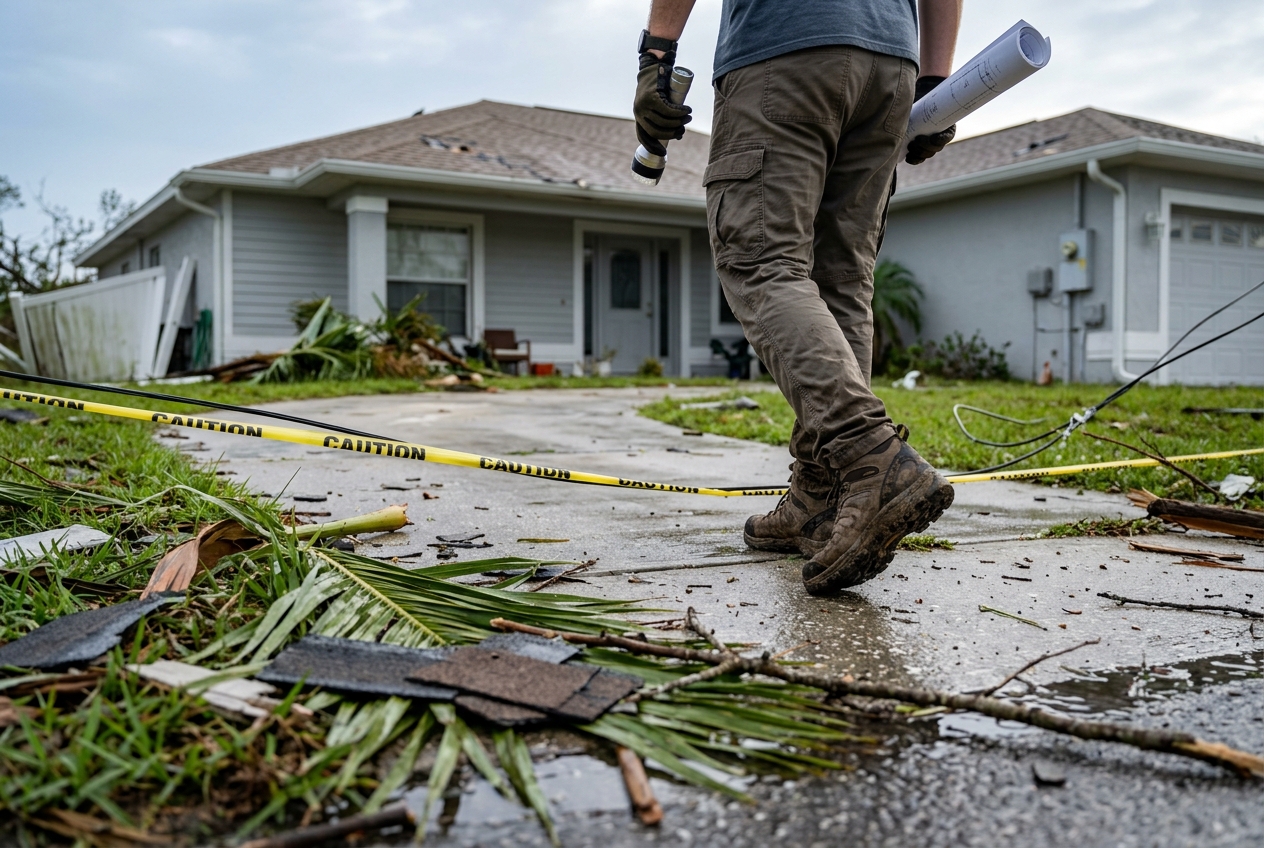
Start by inspecting the exterior of your property. Look for structural damage such as cracked walls or a compromised roof. This matters especially in Florida, where high winds and flying debris can cause significant damage fast. If you notice any signs of structural issues, consult a professional before entering.
Next, check for downed power lines or broken gas lines outside your home. These pose serious dangers and should be reported immediately to utility companies. Never attempt to move downed lines yourself. Floodwaters can also hide live electrical wires, so stay alert and avoid standing water if you suspect electrical hazards.
Once it’s safe to enter, carry a flashlight rather than using candles or open flames. An open flame in a home with a slow gas leak is exactly the kind of risk you can’t take back. Watch for sharp objects like glass shards or nails scattered across the floor. Sturdy, closed-toe shoes are a must.
Mold is another serious concern, particularly in Florida’s humidity. Standing water inside your home creates a breeding ground for mold that can begin growing within 24 to 48 hours. Dry out damp areas as quickly as possible and consider running dehumidifiers to speed things along. A musty smell or visible mold growth means it’s time to call a remediation specialist.
Also look for signs of pest infestations. Flooding pushes snakes, rodents, and other wildlife into homes. Check potential entry points and secure them as needed. Be especially careful when entering sheds or garages that may have been sitting closed since before the storm.
Staying vigilant protects both you and your family from threats that don’t always announce themselves.
Restoring Utilities Safely
Getting your utilities back online is one of the most important parts of returning home, and one of the easiest places to make a costly mistake.
Before anything else, make sure it’s safe to approach your home. Downed power lines, standing water, and structural damage can all affect what you do next. If you spot downed lines, don’t touch them. Report them to your utility company and give them a wide berth.
Your first priority inside should be checking for natural gas leaks. If you detect a sulfur-like smell, leave immediately and contact your gas provider from a safe distance outside. Do not flip any light switches or use electronic devices, since even a small spark could ignite leaking gas.
Once you’ve confirmed there’s no gas issue, turn your attention to the electrical system. If your home took on water, have a licensed electrician assess everything before you flip a single breaker. Water damage can hide in walls and panels, and it doesn’t take much to make a circuit dangerous.
For your water supply, boil water until local authorities confirm it’s safe to drink. Hurricanes can compromise public water systems in ways that aren’t always visible. It’s a simple step that takes minutes and can prevent serious illness.
Take a close look at outdoor and indoor plumbing as well. Fallen trees or storm debris can damage sewer lines and septic systems in ways that aren’t obvious at first glance. Slow drains or backups are warning signs worth taking seriously.
Restoring utilities isn’t just about getting the lights back on. It’s about making sure each system is safe before you rely on it. Staying cautious now means fewer surprises later.
Communicating Return Plans
Once authorities declare it safe to return, coordinating your trip home with clear communication can save you a lot of frustration and keep you out of harm’s way.
Start with local news outlets or official county websites for the latest updates. Florida radio stations and online platforms frequently post details on road conditions and utility restoration progress. Having that information before you leave puts you ahead of most people on the road.
Reach out to neighbors or local contacts if you can. Someone who’s already back can tell you things no official update will, like which streets are still flooded or whether there’s a gas smell in the neighborhood. If you’re part of a neighborhood association, check for any special instructions they may have shared.
Before you set out, let a friend or family member know your plan. Share your departure time, expected arrival, and your intended route. That way, if something goes wrong along the way, someone knows to check in on you.
Use technology wisely. Real-time traffic and weather apps are useful for navigating home and catching any new developments. If cellular networks are spotty or down, keep a paper map in the car. It’s not glamorous, but it works.
Be ready to adjust. Conditions after a hurricane shift quickly, and what looked like a clear route at 8 a.m. can change by noon. Patience matters here too, since many residents will be heading back at the same time. Keeping lines of communication open and staying flexible will make the whole process a little smoother.
Frequently Asked Questions
What precautions should I take when returning home?
Returning home after a hurricane can feel overwhelming, but the right preparation makes a real difference. Check local news or emergency services for clearance updates before heading out. Wear sturdy shoes and protective clothing to guard against debris and contaminants. Bring a flashlight since power outages are likely widespread, and drive carefully since roads may still be flooded or blocked. Follow the instructions of emergency workers and respect any roadblocks you encounter.
How do I assess my property for hidden hazards?
Once you’re on your property, inspect carefully before going inside. Report downed power lines immediately and never touch them. Look for structural damage like cracks, leaning walls, or shifted foundations, all of which can signal instability. As you enter, sniff for gas or listen for hissing sounds. If you detect either, leave right away and contact authorities. Watch for water damage and early signs of mold or mildew. Unusual odors may also point to chemical spills or other hazardous substances worth flagging.
What steps are necessary to restore utilities safely?
Contact your utility companies first to check the status of services in your area. Don’t restore power until you’re sure the electrical system is safe, and if there’s been water damage, bring in a qualified electrician. Have a professional inspect gas connections before restoring service. Check for boil water advisories from your local health department before drinking tap water. Only attempt repairs yourself if you genuinely know what you’re doing. Speed should never come before safety.
Next Steps For You
Getting your home back to normal after a Florida hurricane takes careful planning and a willingness to slow down when it matters. Once authorities give the green light, focus on navigating potential hazards like structural damage and utility issues before settling back in. Inspect your property thoroughly for immediate dangers such as downed power lines or gas leaks. Stay alert to slower-developing threats like mold and pest infestations, and handle every utility with caution to avoid creating new problems.
Keeping communication open and staying current on local updates will make your return smoother. If you have questions about your coverage or want to make sure your policy is ready before the next storm rolls in, reach out to the team at Anderson Insurance Group. Whether you need a policy review or are exploring mobile home insurance options, Anderson Insurance Group is here to help you get back on solid footing in the Sunshine State.