Understanding Drowning Risks
Florida summers and water go hand in hand, and so do the risks that come with them. Water safety isn’t something to think about after an incident. It’s what lets your family actually enjoy the season. Whether you’re spending the day at a Palmetto beach, a neighborhood pool, or a local lake, knowing how to stay safe around water makes all the difference. Whether you’re a seasoned Floridian or new to our water-rich environment, understanding the potential risks and taking a few preventive measures can turn a stressful outing into a genuinely relaxing one.
This matters even more if you have children or pets. Accidents can happen in an instant, but with some simple precautions, you can relax and enjoy the sun. From supervising young swimmers to securing your home pool, these steps protect your loved ones and give you real peace of mind. Swimming and water sports are wonderful summer pastimes. They just ask for a little respect and awareness in return.
So grab your sunscreen and let’s get into some essential tips for staying safe around water this summer in Palmetto and throughout our beautiful state. Staying safe doesn’t mean sacrificing fun. It just makes the fun last longer.
Understanding Drowning Risks
Drowning risks are one of the most important aspects of water safety to understand, especially during Florida summers. The abundance of pools, lakes, and beaches makes swimming a favorite pastime, but they also pose serious risks when safety measures slip.
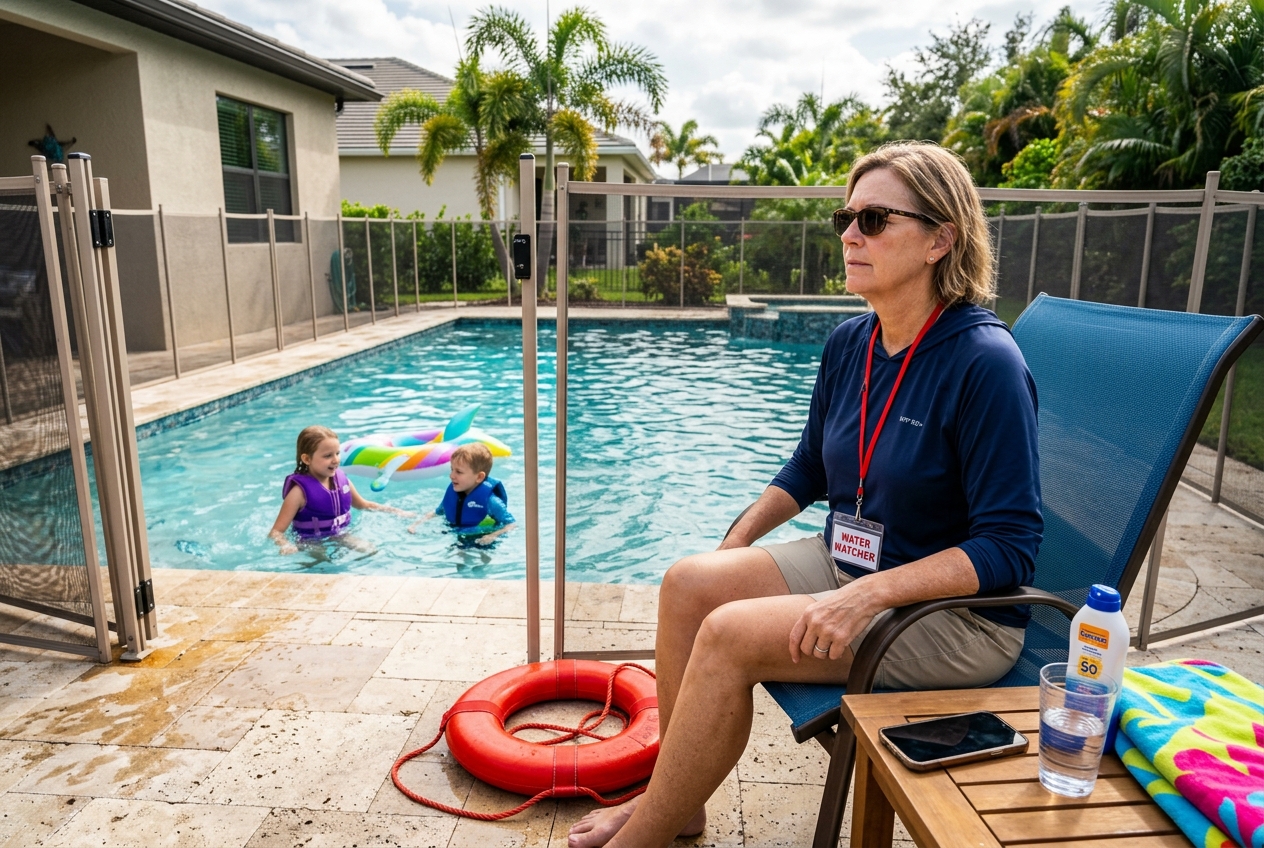
One of the most overlooked factors is how quietly drowning happens. Many people expect a loud struggle, but it can occur in less than a minute with almost no noise at all. That’s why constant supervision matters so much, particularly with children. Designate a responsible adult as a “water watcher,” someone who stays completely undistracted by phones or books. When you’re at a pool or beach, keep your eyes on the swimmers even when lifeguards are present.
Education is just as important as supervision. Enroll children in swimming lessons as early as you can. Many local community centers in Florida offer subsidized programs that teach essential swimming skills alongside water safety basics. Teach kids the core pool rules too: no running on the deck, how to properly enter and exit the water, and what to do if they see someone in trouble.
Flotation devices are another area where people often get the wrong idea. They can help keep a child buoyant, but they are not a replacement for an attentive adult watching from the edge. Make sure young or inexperienced swimmers wear U.S. Coast Guard-approved life vests when in or around water. Those provide far more reliable support than inflatable floaties.
Pool owners should go a step further with additional safeguards. Fences with self-locking gates are one of the most effective barriers against unsupervised pool access. A pool alarm adds another layer, alerting you if someone enters the water unexpectedly.
Getting familiar with drowning risks and putting solid water safety practices in place can greatly reduce the likelihood of incidents, making Florida’s waterways safer for everyone.
Creating a Safe Pool Environment
Start with the basics: a sturdy fence. Florida law requires residential pools to be completely enclosed by a barrier with self-closing and self-latching gates. This keeps young children and pets from wandering in unnoticed. Check that the fence is in good repair and test the gate mechanism regularly. It takes about thirty seconds and can prevent something devastating.
Whenever the pool is in use, designate an adult Water Watcher who stays focused for the entire swim session. No phone scrolling, no catching up on a book. Even experienced swimmers can run into trouble fast, so undivided attention is the standard.
Keep proper safety equipment within arm’s reach at all times. A life ring, a long-reaching pole, and a first-aid kit should live near the pool, not in a shed across the yard. Also consider learning CPR if you haven’t already. A fast, informed response in an emergency can genuinely save a life.
Post clear rules where every swimmer can see them. No running, no diving in shallow water, buddy system for younger kids. Bring them up often, especially at the start of a swim session, because kids tend to forget the rules the moment they see the water.
Water quality is part of the picture too. Balanced chemicals keep the pool clean and reduce the risk of infection. Regular testing prevents cloudy water and algae buildup, both of which can create hazards beyond just being unpleasant.
Pool alarms are worth adding to the mix. Many systems detect water disturbances or send an alert when a gate opens without permission. Florida’s unpredictable storms add another layer of concern, particularly around electrical safety. Make sure any electrical devices near the pool are properly installed and regularly inspected, especially after severe weather.
Building these precautions into your routine creates a swimming environment where your family and guests can actually relax.
Educational Tips for Families
Teaching your family about water safety is one of the best investments you can make for a Florida summer. The fun is real, and so are the risks. Getting everyone on the same page before anyone gets in the water is how you protect both.
Start with swimming lessons. In Palmetto and the surrounding area, many community centers and YMCAs offer programs tailored to different age groups and skill levels. Lessons help children feel more comfortable and confident in the water, which directly lowers their risk of getting into trouble.
Pair those lessons with clear, consistent pool rules that everyone understands. Talk through them as a family so there’s no confusion. No running near the pool, always swim with a buddy, never push or jump onto someone else in the water. Going over the rules before each swim, even briefly, helps them stick even when kids are eager to jump in.
Knowing how to respond in an emergency is just as important as prevention. Basic water rescue techniques and CPR training can make a critical difference in the time before help arrives. Local hospitals and fire departments often offer courses, and the confidence that comes from being prepared is its own reward.
Don’t overlook sun safety as part of the conversation. Florida’s sun is relentless, especially from late morning through mid-afternoon. Make sure your family applies broad-spectrum sunscreen with a high SPF, wears protective clothing when out of the water, and takes regular breaks in the shade. Keep water bottles handy. Staying hydrated is easy to forget when everyone’s having a good time.
These habits, practiced consistently, keep the water fun and the worry manageable.
Frequently Asked Questions
What are the essential safety rules for pool activities?
Keeping safety front of mind starts with designating a responsible adult to supervise at all times. Even strong swimmers can encounter trouble, so close attention matters. Install barriers like fences or covers when the pool isn’t in use to prevent unsupervised access. Make sure everyone in the group knows how to swim, and arrange lessons for those who don’t. Keep lifesaving equipment like life rings and reaching poles within easy reach. Establish rules like no running on wet surfaces and no diving in shallow areas, and enforce them consistently.
How can accidents be prevented around water?
Careful planning and consistent vigilance go a long way. Keep pool areas well-lit to prevent trips, and make sure surrounding surfaces are slip-resistant. Use a buddy system so swimmers look out for each other. Learn CPR and basic first aid, since those skills can be vital before help arrives. Teach children about the dangers of drains and suction outlets to prevent entrapment. And stay aware of local weather. Florida’s summer storms can create dangerous conditions very quickly.
Are there specific insurance policies for water-related liabilities?
Yes. Home insurance policies often include pools, but it’s worth confirming whether yours covers liability for water-related incidents. If you own a pool, an umbrella policy can provide additional liability protection beyond your standard limits. Business owners with pools or water amenities, like hotels, should look into commercial liability coverage. Since policies vary significantly by carrier, it’s worth talking through your specific situation with an insurance professional like Anderson & Associates to make sure you have the right protection in place.
Next Steps For You
Water and pool safety are what make long Florida summers genuinely enjoyable rather than nerve-wracking. Understanding the hazards and acting on them, through constant supervision, clear rules, swimming lessons, and proper barriers, puts families in a much stronger position. Palmetto homeowners benefit from following state pool barrier laws and layering in extras like alarms and poolside safety equipment. CPR training and open family conversations about water safety routines can make all the difference. A little prevention goes a long way toward making sure your time on the water stays fun, relaxed, and secure.
Ready to make sure your home and pool are properly protected this summer? Anderson & Associates is here to help you find the right coverage for your peace of mind.