Conducting a Thorough Inventory
Trying to remember every item in your home after a hurricane has torn through it is nearly impossible, especially when stress and emotions are already running high. That’s exactly why having a home inventory ready before the storm hits can be a lifesaver for Florida homeowners. Documenting your belongings in advance not only eases the insurance claims process but also gives you genuine peace of mind when you need it most.
Living in Florida means preparing for the unpredictable nature of hurricanes and their potential impact on homes. Your belongings, from furniture to electronics, serve as the cherished essentials that make your house a home. By creating a detailed inventory, you’re ensuring that you can account for your possessions and support any insurance claims efficiently.
A well-prepared inventory might include photos, receipts, and a detailed list of your belongings. While it takes some time upfront, it can save you significant frustration and financial loss later. Coverage varies by policy and carrier, so it’s always wise to check your specific insurance details with your provider. Preparing now can make recovery just a little bit easier when the next storm approaches.
Conducting a Thorough Inventory
Creating a home inventory might seem tedious, but it can be a game-changer when filing insurance claims after a storm. Picture this: a detailed list of your home’s contents, complete with descriptions, values, and photos. That list becomes essential documentation if your home sustains damage from a hurricane or another severe weather event.
Start in one room and work your way through the house systematically. Include everything, from furniture and electronics to appliances, clothing, and personal items. Don’t forget hidden spaces like closets, attics, and garages. These areas often hold valuable items that are easy to overlook but crucial to capture.
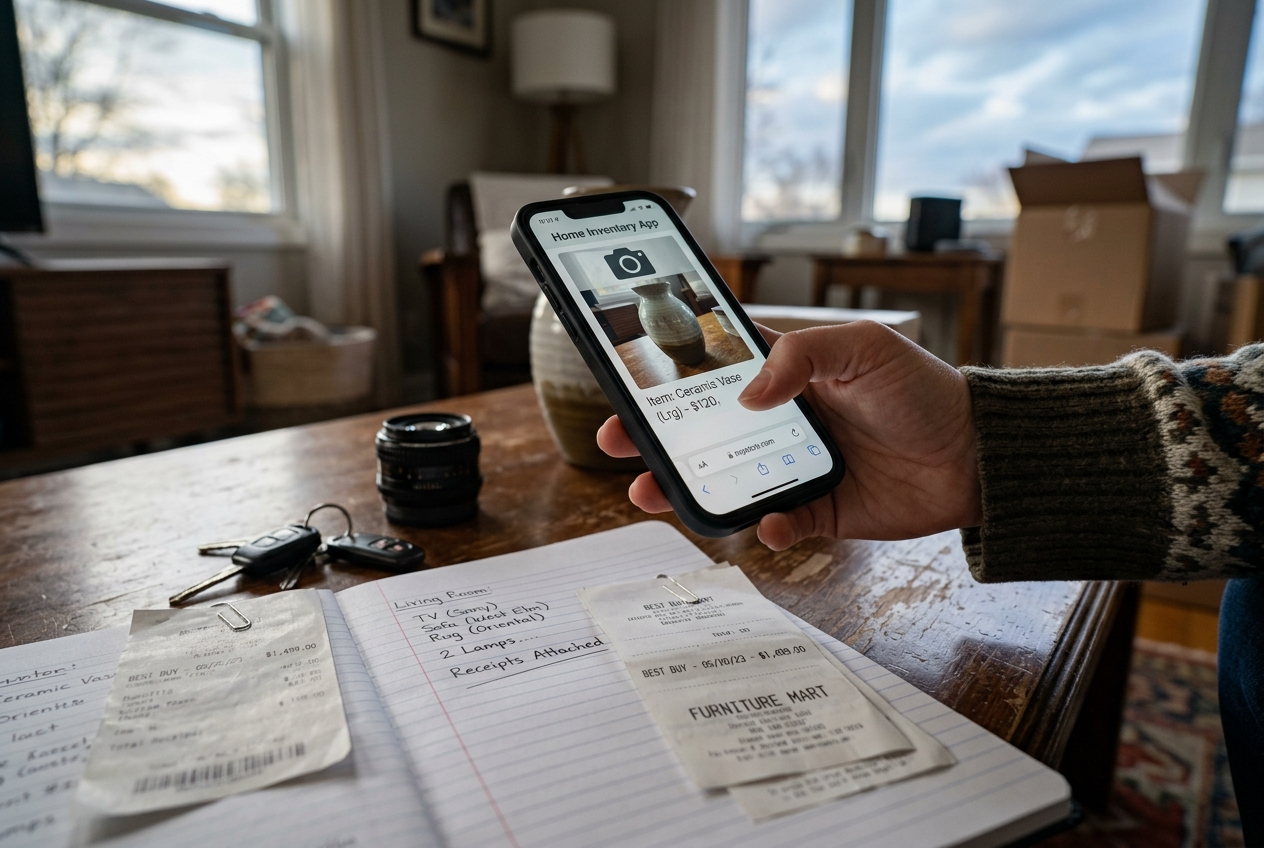
For each item, note its make, model, purchase date, and cost. Receipts are incredibly useful, so attach digital copies whenever possible. For high-value items like jewelry, artwork, or collectibles, consider getting appraisals to substantiate their worth. A thorough inventory gives your insurance company clear evidence of your losses and simplifies the claims process significantly.
Visual evidence adds another layer of credibility. Photograph each room and capture individual high-value items in their locations. Videos work well too, since they offer a walkthrough perspective of your home’s interior. Make sure every image is clear and includes as much detail as possible.
Once your inventory is complete, store it safely. Digital storage is an excellent option, offering easy access and protection from physical loss. Upload your inventory to a secure cloud service or email it to yourself as a backup. Update it annually or whenever you make significant purchases, sell items, or renovate. Keeping it current ensures your coverage lines up with what you actually own.
In Florida, where the risk of hurricanes and wind damage is significant, a detailed home inventory is particularly valuable. It streamlines recovery and rebuilding after a storm, and it gives you one less thing to worry about when things get difficult. For additional guidance, the FEMA Home Inventory Guide offers helpful tips on getting started.
Documenting Valuable Items
When it comes to pre-storm planning in Florida, documenting your valuable items is a step that pays off fast when you’re filing a claim after a storm passes. High winds and flooding can cause serious damage, so having a solid record of your possessions before that happens is invaluable.
Start by choosing a documentation method that works for you. Most people find that photos or videos serve as straightforward, effective proof of their belongings. As you capture images, be thorough. Photograph each room from multiple angles and don’t skip closets, cabinets, or storage areas. Zoom in on high-value items to capture serial numbers, model numbers, and any distinct features. Describe these details in writing as well, so you have a comprehensive inventory list to pair with your visuals.
A spreadsheet can help you stay organized. List each item’s name, purchase date, current condition, and estimated value. That structure pays off when you need to file a claim quickly. Keep purchase receipts and appraisals in a digital format so they’re easy to pull up, even if you’re not at home.
Storing your documentation safely is just as important as creating it. Cloud services let you access your inventory lists and images from anywhere, which matters if your home sustains damage and you’re not able to return right away.
When documenting valuable items, keep in mind that coverage varies based on your specific policy and carrier. Review your home insurance policy during your pre-storm planning and make sure it accurately reflects the current value of your belongings. If anything seems unclear, reach out to your local insurance provider.
These steps can save real time and stress after a Florida storm. A well-documented inventory simplifies the claims process and helps ensure you receive appropriate compensation for your losses. The National Association of Insurance Commissioners also provides useful resources on building and maintaining a home inventory.
Using Inventory for Claims
Once the storm passes and life starts returning to normal, a home inventory can make the claims process far more manageable. Knowing exactly what you had gives you a clear starting point and takes a lot of the friction out of working with your insurance provider.
A thorough inventory means you know what’s missing or damaged without having to rely on memory alone. You won’t find yourself scrambling for old receipts or trying to reconstruct purchase histories while you’re in the middle of recovering from storm damage. Instead, you can present a clear, accurate list to your insurer right away.
In Florida, where hurricanes and severe weather are part of life, having that inventory ready before a storm means you’re not piling more stress onto an already hard situation. Photographs or videos of each room and individual high-value items add detail that adjusters genuinely find helpful. Seeing the condition and placement of items helps them understand your loss more readily than a written list alone.
When you contact your insurance company to file a claim, presenting a well-organized inventory speeds things up. Insurers appreciate clear, concise documentation because it cuts down on the back-and-forth that often bogs down claims. That’s the real value here: turning what could be a laborious process into something much more straightforward.
Keep in mind that coverage varies by carrier and specific plan. Having an inventory puts you in a better position to discuss your coverage confidently and advocate for the compensation you’re owed.
Taking the time to build a pre-storm inventory means that after the storm, you can focus on recovery rather than paperwork. That peace of mind is worth a lot for your family’s security. The Florida Division of Emergency Management offers additional resources to help residents prepare before hurricane season arrives.
Frequently Asked Questions
What items should be included in a home inventory?
When creating a home inventory, include everything you believe holds value, both monetarily and sentimentally. Start with high-value items like electronics, appliances, and jewelry. Don’t forget everyday essentials such as furniture, clothing, and kitchenware. Where possible, capture details like brand, model, and serial numbers. Personal items with sentimental value, like family heirlooms or artwork, should be on your list too. Coverage varies by policy, so check with your insurer to make sure you’re including everything that matters.
How do I document my possessions effectively?
Effective documentation can be as simple or detailed as you prefer. A written list is a solid starting point, but photos or videos add real depth. Capture close-ups that show features or distinguishing marks, and narrate your videos as you go, pointing out key details. Receipts, appraisals, and warranties support your entries, particularly for valuable items. Several digital tools and apps can help you organize and store everything safely and accessibly. The Insurance Information Institute offers a helpful breakdown of best practices for home inventory documentation.
How does a pre-storm inventory simplify the claims process?
Having a detailed inventory before a storm puts you in a stronger position if you need to file a claim. With documented proof of your possessions, you can quickly and accurately report damages or losses, which speeds up the entire process and reduces confusion when providing evidence to your insurance carrier. Florida residents know the risks that hurricanes and storms bring, making a pre-storm inventory a practical step in protecting your home and easing recovery. Always review your policy details with your insurer for specific coverage questions.
Next Steps For You
Building a pre-storm home inventory is one of the most practical things you can do before hurricane season hits. By documenting everything from electronics to high-value personal items, you’re setting yourself up for a smoother recovery if the worst happens. In Florida, where storm risks are simply part of life, having clear records helps you quickly identify losses and communicate effectively with your insurer. This organized approach streamlines claims and ensures your possessions are accurately reflected in your coverage. The time you put in now is a genuine investment in your peace of mind when facing the aftermath of severe weather. To learn more about coverage options or get personalized guidance, visit Anderson Insurance Group.